Mermaid Reef – Fishing – Gold Coast – A Prime Fishing Location

Mermaid Reef – Fishing Hot spot

Where is Mermaid Reef?

Mermaid reef is located just off the coastline, adjacent to Mermaid beach towards the southern end of themackerel caught on true blue fishing charters Gold coast. There is a considerable amount of natural reef beginning just a few hundred metres out behind the breakers. The depths vary from around 25 metres, with pinnacles rising up to just a few metres below the surface.

Can I fish at Mermaid beach reef?

Absolutely, it’s a very popular local hot spot. Other activities undertaken at mermaid beach reef include, Snorkeling, Diving, Kayaking and spear fishing. The reef system holds a wide variety of both bait fish and larger predatory fish species. As such it can be a very popular spot when the Mackerel are running.

How Do I Get There?

The two main ways to reach the reef are by boat or kayak. Kayaks can be launched from either Mermaid beach or Tallebudgera creek. For trailer boats you can launch at either Southport or run south down the coast. (approximately 12 nautical miles from the Gold Coast Seaway). Alternatively you can travel up the coast from the Tweed river.

Similarly, smaller vessels can also be launched at Currumbin Creek or Tallebudgera inlet. Please be forewarned both of these locations have very shallow coastal bars that need to be crossed to get offshore. As a rule, these bars should only be attempted when the tide is high, and the weather conditions are favourable with a very low swell. Always remember no fish is worth your life, if the bar is rough, go home and wait for a day with better conditions.

Fishing Mermaid reef

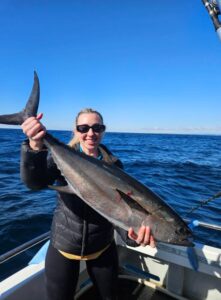
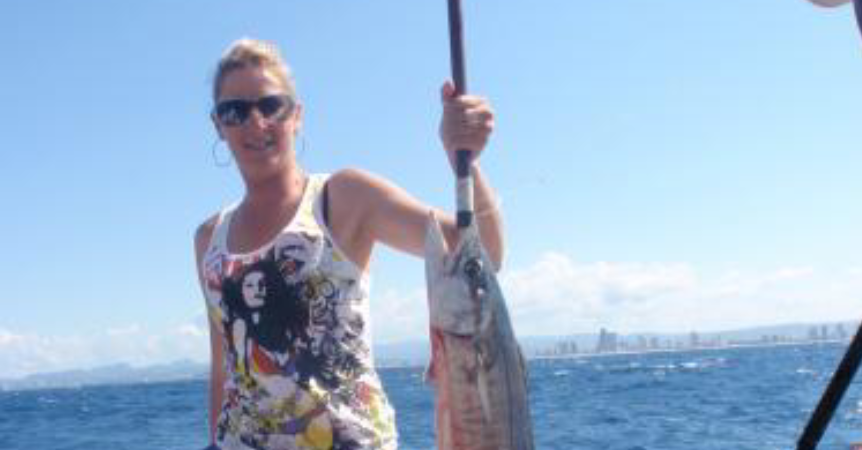
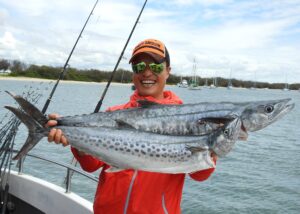
Spotted Mackerel caught on the gold coast at mermaid reefFishing at Mermaid can be hot and cold. Without a doubt it can be one of the best local spots to target and catch Mackerel (Spanish, Spotted, and School). Mackerel fishing is seasonal. Best months are December – April. Most people who fish this area tend to chase mackerel. However, this area holds a plethora of other quality species too.

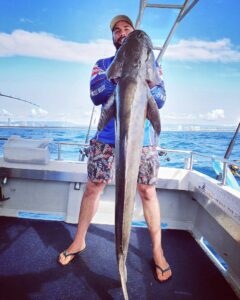
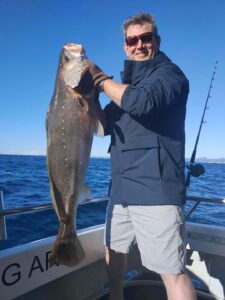
Over the years while we have been down there chasing mackerel, we have caught numerous other large trophy fish at the reef. Common species we have caught include mulloway, big cod, cobia, sharks and even big GT’s have fallen victim to nicely presented live baits.

Generally speaking, the best times to fish this reef system is early morning as the sun comes up over the horizon, or late afternoon around dusk.

What’s the Best Bait To Use at the Reef?

If you are planning to chase the bigger predatory fish. Without a doubt either live yellowtail or slimy mackerel are by far the most productive baits. These can be caught on the reef itself. Alternatively, lightly weighted floating pilchards either whole or cut into pieces will get good results too.

Mermaid fishing Charters

Can I Go on a fishing charter to mermaid beach reef?

Absolutely, most charter boats fish the reefs off mermaid beach at certain times during the year, particularly when the Mackerel are biting. It is best to book on a weekday for the best fishing results. Firstly, there is usually less boats on the reef. Secondly you might get a better price for a mid-week session. Book in to visit these prime fishing locations.

Fishing 36s Gold Coast – 36 Fathom Reef

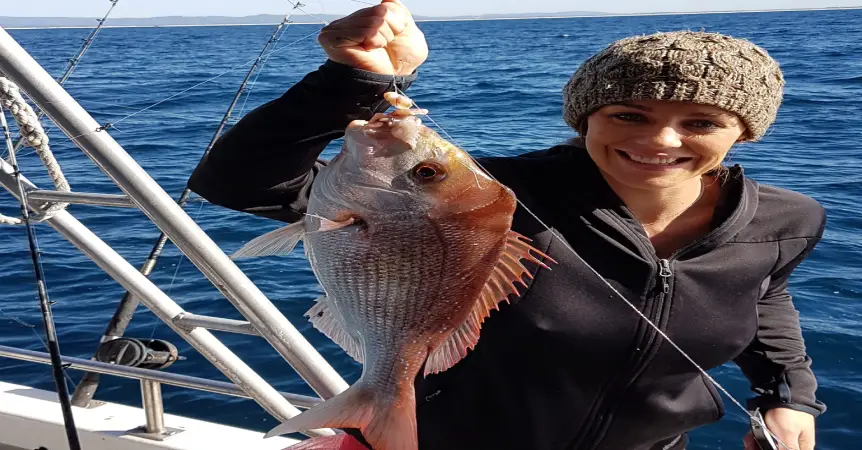
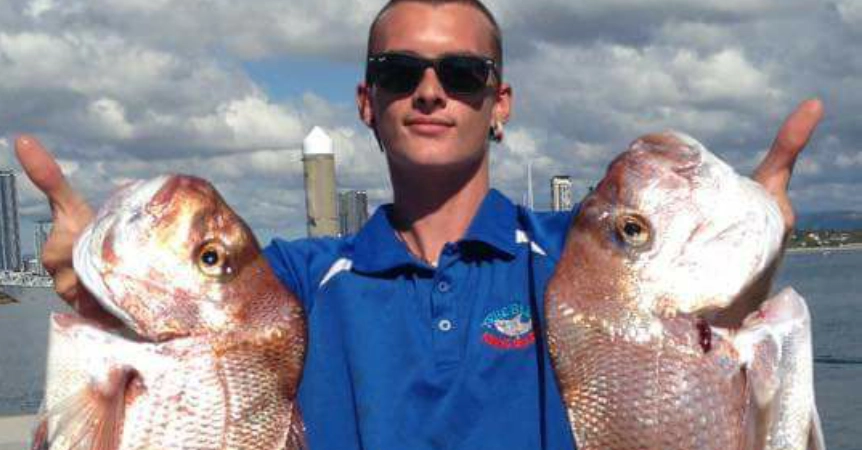
Fishing the 36s east of the Gold Coast can produce some quality fish when the right techniques are used.36 fathom Reef Cod Float lining with lightly weighted pilchards is generally the best method for catching the bigger Snapper that lurk deeper in the water column. Additionally, Patternoster style rigs are also effective. Particularly if the current is running hard. If the water is blue and there is plenty of bait present, it is well worth trying to catch pelagic species too. Live baiting while fishing at anchor or on the drift is also another productive technique for chasing the likes of marlin and dollies.

Where is The 36 Fathom Reef ?

The 36s run parallel with the coast and can be found approximately eleven nautical miles due east of the seaway. Furthermore, there is miles of good ground, and the reef system runs all the way along the coast. However it pays to have a good look around out there and concentrate on working the rocky pinnacles.

What Are the Best Baits For Fishing the 36s ?

If you are going to spend the time heading to these wider reefs. It is important to take good quality freshBest Baits To Use For Snapper Fishing bait, and it also pays to stop and catch a few live baits in close first.

  • Live Baits, Yellowtail or Slimy mackerel
  • Pilchards (whole or cut in half)
  • Squid
  • Fresh flesh baits such as bonito and mullet

What Species Can I Catch at the 36s off The Gold Coast?

  • Snapper
  • Teraglin
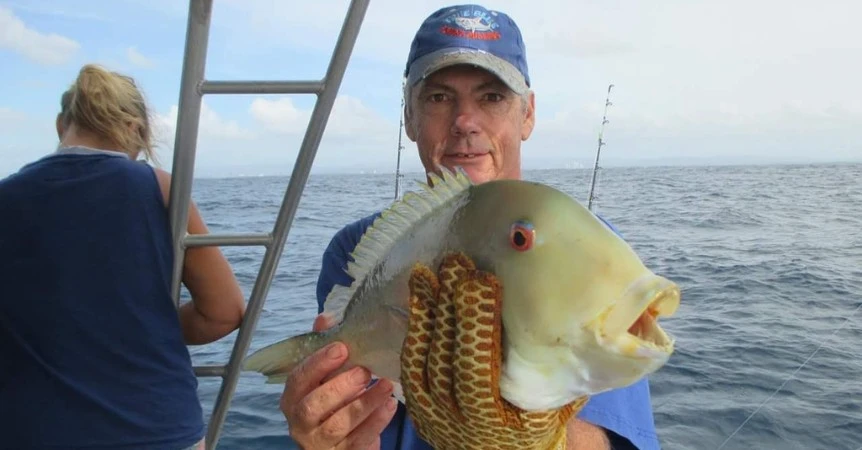
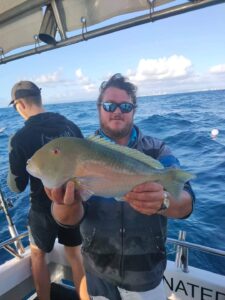
  • Venus Tuskfish
  • Samson Fish
  • Mahi Mahi
  • Wahoo
  • Marlin
  • Pearl perch
  • Teraglin
  • Sharks
  • Cod
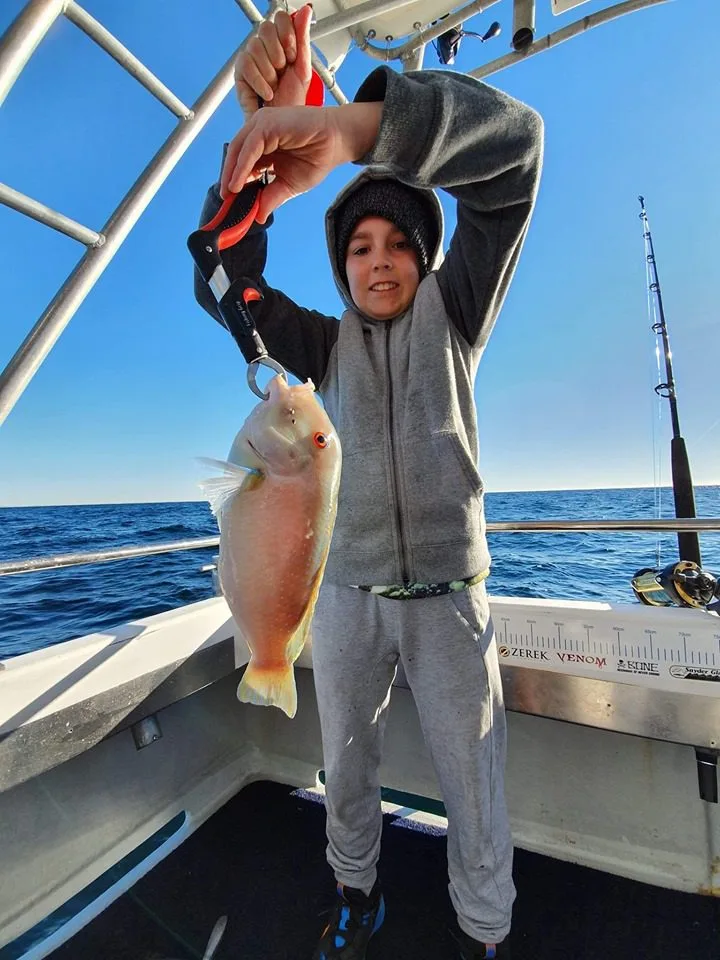
  • Gold Spotted Wrasse
  • Cobia

How to Get Out to The 36 Fathom Grounds

These wider grounds on the 36s are a considerable distance offshore. In this case you want a good quality, ultra reliable boat. At least 6 metres is recommended. The current out wide can run at three knots plus. In the event your engines won’t start. Your boat can drift a long way in a short period of time. Furthermore, help from organisations like VMR and the Coast guard will take at least 1-2 hours to reach you.
A full complement of safety gear as required by maritime safety Qld is absolutely essential. Always remember that no fish is worth your life. In the event that the weather looks dodgy on the day you plan to head out to the 36-fathom reef. Accordingly, it’s advisable stay at home and wait for a day with more favourable weather conditions.

Fishing 36s and 50s – Gold Coast Charter Boats

If you don’t own a suitable vessel that is seaworthy, or you would like to head out with someone experiencedAnglers fishing on MV Fat Hooker’s large non-slip rear deck on a bigger boat first. You may want to consider chartering a boat instead. Why not gather up a group of family and friends and head out for a full day trip to the wider 36 and 50 fathom grounds. Our full day fishing charters are available seven days a week weather permitting.

All the bait and quality fishing tackle is supplied. While an experienced friendly crew will provide all expertise and tips to help you achieve a good fishing technique.

For more information please give us a call on +61755109622

Palm Beach Reef – Fishing – Gold Coast – Mackerel Hot Spot

Palm Beach Reef Fishing

Where is Palm Beach Reef?

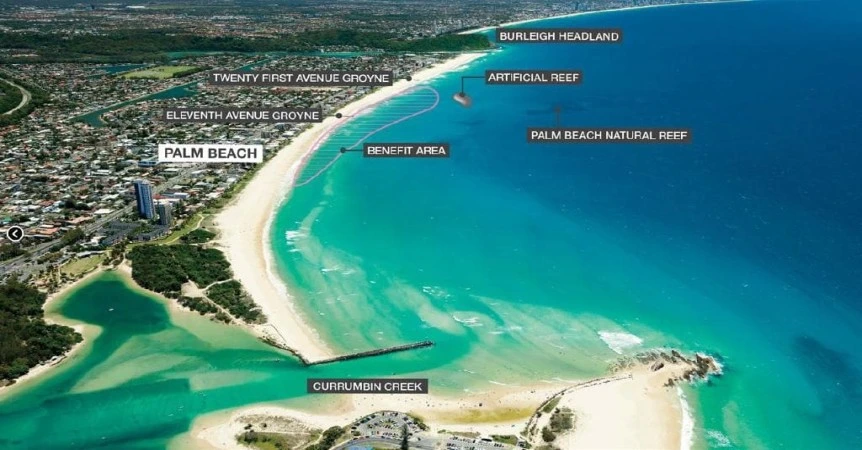
Palm beach reef is located just off the coastline, adjacent to Palm beach on the southern end of the Goldspanish mackerel palm beach reef Coast. The newer man-made section is a mere 270 metres east of the beach. However, there is also a considerable amount of natural reef also. The depths vary from 25 metres, with pinnacles rising up to just 5 metres below the surface.
What Can I do at Palm beach reef?

The main activities undertaken at Palm beach reef are Fishing, Snorkeling, Diving, Kayaking and spear fishing. The reef system holds a wide variety of both bait fish and larger predatory fish species. As such it can be a very popular spot when the Mackerel are running.

How Do I Get There?
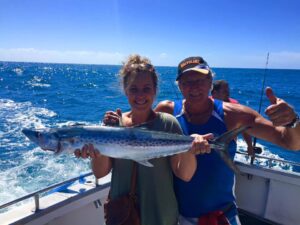
spotted mackerelThe two main ways to reach the reef are by boat or kayak. Alternatively, if you are a competent swimmer/diver you can swim out from the beach. Kayaks can be launched from either Palm beach or Currumbin creek. For trailer boats you can launch at either Southport and run south down the coast. (approximately 12 nautical miles from the Gold coast Seaway). Alternatively you can travel up the coast from the Tweed river. Furthermore, smaller vessels can also be launched at Currumbin Creek or Tallebudgera inlet. Please be forwarned both of these locations have very shallow coastal bars that need to be crossed to get offshore. As a rule these bars should only be attempted when the tide is high and the weather conditions are favourable with a very low swell. Always remember no fish is worth your life, if the bar is rough, go home and wait for a day with better conditions.

Fishing Palmy Reef

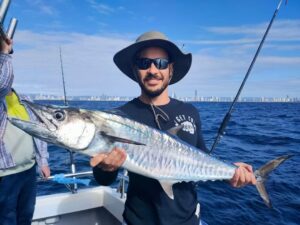
Fishing at Palmy reef can be hot and cold. Without a doubt it can be one of the best local spots to target and catch Mackerel (Spotted, Spanish and School). Mackerel fishing is seasonal. Best months are December – April. Most people who think about fishing palmy tend to chase mackerel. However, this area holds a plethora of other quality species too. Over the years while we have been down there chasing mackerel, we have caught numerous other large trophy fish at the reef. Common species we have caught include mulloway, big cod, cobia and even big GT’s have fallen victim to nicely presented live baits. Generally speaking, the best times to fish this reef system is early morning as the sun comes up over the horizon, or late afternoon around dusk.

What’s the Best Bait to Use at Palm Beach Reef?

If you are planning to chase the bigger predatory fish. Without a doubt either live yellowtail or slimyMackerel fishing charter mackerel are by far the most productive baits. These can be caught on the reef itself. Alternatively, lightly weighted floating pilchards either whole or cut into pieces will get good results too.
Palm Beach fishing Charters

Can I Go on a Gold coast fishing charter to Palm beach reef? Absolutely, most charter boats fish the reefs off Palm beach at certain times during the year, particularly when the Mackerel are biting. It is best to book on a weekday for the best fishing results. Firstly, there is usually less boats on the reef. Secondly you might get a better price for a mid-week session.
Squid Fishing Gold Coast – How To Catch Squid

Squid Fishing Gold Coast – Brisbane – Tweed Heads

A Complete Local Guide

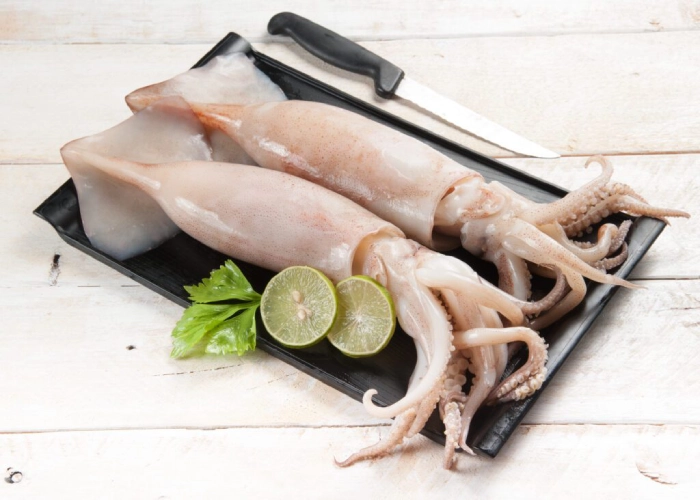
Squid fishing on the Gold Coast, Brisbane and Tweed Heads is both exciting and rewarding. Not only areBest set ups to fish for squid squid a top-quality table fish, they also make exceptional bait for a wide range of inshore and offshore species.
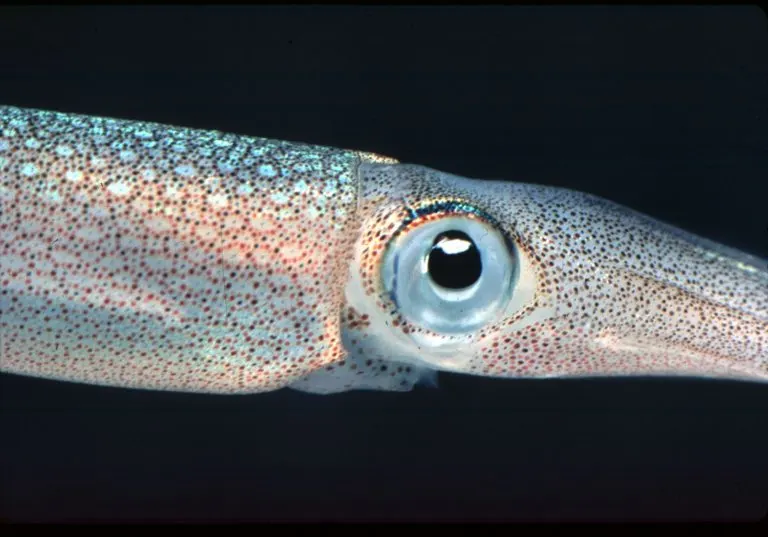
Regular contributor Anthony Coughran shares his expert knowledge on local squid species, where to find them, and the best techniques to consistently catch them in South East Queensland waters.


Squid Species Found in South East Queensland

(Cephalopods)

Australian waters are home to many species of squid, calamari and cuttlefish, with several commonly found around the Gold Coast and surrounding regions.

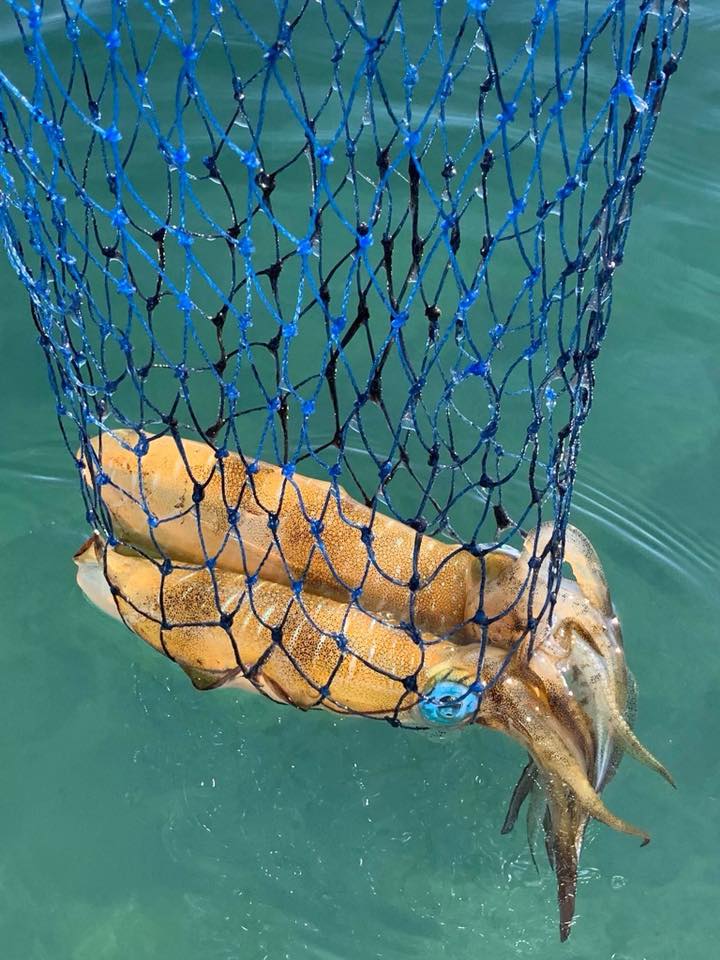
Cuttlefish

Giant Cuttlefish (Sepia apama)
Pharaoh’s Cuttlefish (Sepia pharaonis)

Cuttlefish are found right around Australia. Giant cuttlefish are commonly located over reefs and grassy seabeds, extending out toward the continental shelf. Pharaoh’s and smaller cuttlefish species prefer close coastal reefs, inshore reefs and seagrass areas.

They can grow up to 5kg and 52cm in length, and there are around 10 different cuttlefish species found in Australian waters.


Gould’s Squid (Arrow Squid)

(Nototodarus gouldi)

Gould’s squid are found from the Southern Great Barrier Reef, down through the southern states and acrossSquid Life Cycle and Spawning to Geraldton in Western Australia.

They are typically found in deeper water between 50–200 metres, although smaller squid often move into bays and estuaries during winter. Arrow squid can reach 1.6kg and 40cm, while estuary-based specimens are usually smaller.

They commonly hold around weed beds, riverbeds and channels, spreading out to feed at night.


Luminous Bay Squid

(Loliolus noctiluca)

Found along the entire east coast of Australia, from the Gulf of Carpentaria to Tasmania, luminous bay squid inhabit bays, estuaries and even brackish water.

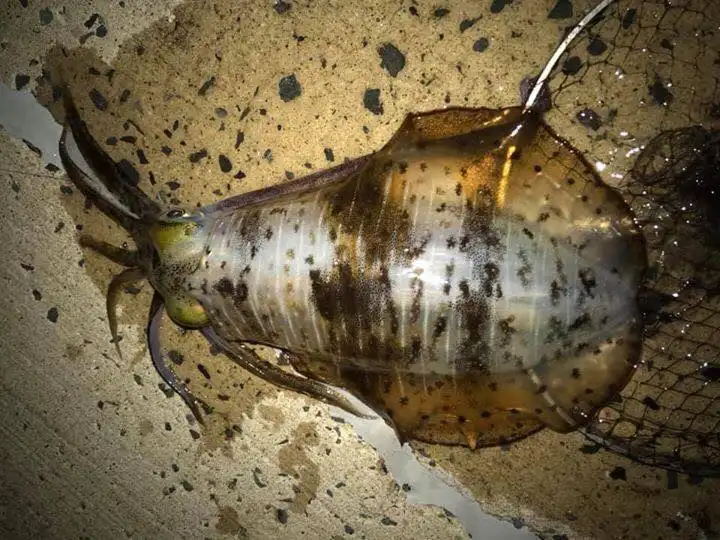
They are usually found over reefs and seagrass beds in depths up to 50 metres. Easily recognised by their dark spots and yellow-pink colouring, they grow to around 10cm and have fins (wings) that are roughly half their body length.


Northern Calamari (Tiger Squid)

(Sepioteuthis lessoniana)

Northern calamari are found in nearshore waters, bays and estuaries from northern NSW, across northern Australia, and as far west as Shark Bay in WA.

They also inhabit offshore reefs to depths of 100 metres, growing up to 2kg and 42cm.


Southern Calamari

(Sepioteuthis australis)

Southern calamari are commonly found on inshore reefs, bays, estuaries and inlets from Brisbane, around the southern states and across to Shark Bay.

They can grow up to 4kg and 55cm. Squid size is always measured by mantle (hood) length, not including tentacles.


Squid Life Cycle and Spawning

Squid are fast-growing creatures. In the early stages of life, they can gain 10–15% of their body weightSquid per day, averaging around 30% growth daily in some species.
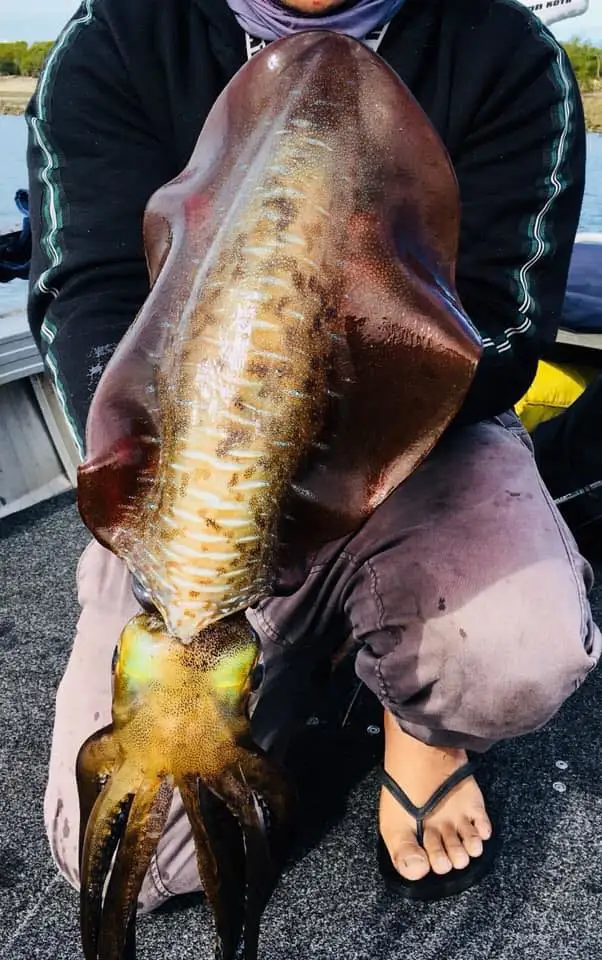
Most squid live fast and die young, with an average lifespan of 12–18 months. Larger species such as giant squid and cuttlefish may live up to 3–5 years.

Female squid can lay up to 100,000 eggs. After spawning, both males and females die, providing an important food source for fish, birds, mammals and crustaceans.


Defence Mechanisms

Squid are masters of camouflage. They can change the colour and texture of their skin to match their surroundings, communicate with each other, hunt prey or evade predators.

If camouflage fails, squid release ink to confuse predators and escape.


Where to Find Squid on the Gold Coast

Tiger squid and arrow squid are commonly found in:

  • Gold Coast Broadwater

  • Moreton Bay

  • Hervey Bay

  • Inshore and close offshore reefs

  • Tweed Coast waters

They are most prevalent during winter and cooler months, hunting over weed beds, seagrass, coral and rocky reefs and even inside marinas.

Squid feed on prawns, small fish, crustaceans and even other squid — yes, they are cannibalistic.


Best Time to Catch Squid

  • Depths: 0.5–5m in estuaries and bays, up to 100m offshore

  • Structure: Jetties, marinas, beacons and areas with artificial light

  • Tides: Two hours either side of high tide

  • Moon: Full moon is especially productive in shallow water


Best Baits for Squid Fishing on the Gold Coast

  • Banana prawns

  • Pilchards

  • Strip baits (mullet, tuna)

Using baited squid spikes under a float keeps the bait in the strike zone and makes it easier to detect bites.


Jigging for Squid

Jig selection depends on:Jigs – Jigging For squid

  • Water clarity

  • Light levels

  • Current

  • Depth

  • Weather conditions

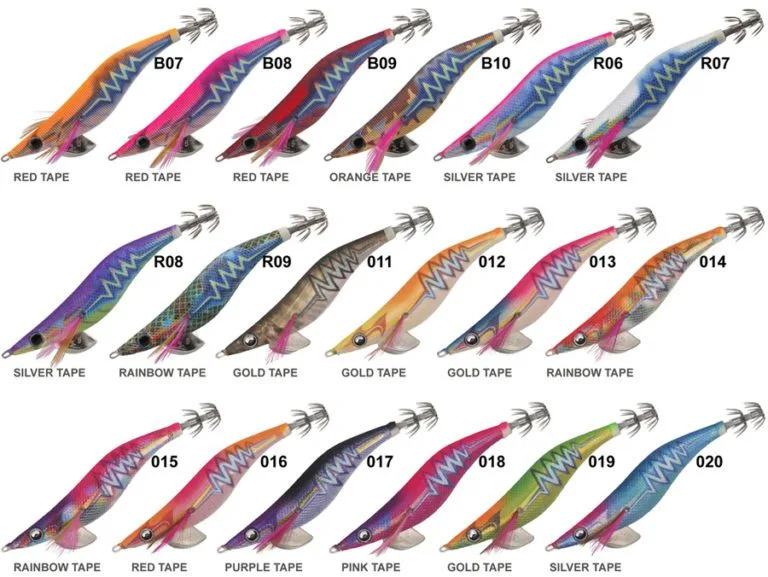
Some days squid prefer 2.5 jigs, other days 3.5 jigs. Glow, UV, natural, black or white patterns all have their moments. Chin weights can help lighter jigs reach deeper water.

Running a jig under a float trailing behind the boat often outperforms actively worked jigs.


Jig Retrieve Technique

  1. Cast out and allow the jig to sink near the bottom

  2. Slow roll the retrieve

  3. Add occasional hops and sharper whips

  4. Adjust speed and action based on squid response


UV Lights and Artificial Lighting

UV torches help charge glow jigs and reveal how much UV they emit. Artificial lights attract baitfish, which in turn draw squid.

Drifting with lights on for a few runs, then without, helps determine what works best on the night.


Best Squid Fishing Tackle Setup

  • Line: 6–10lb braid or monoSquid – (Cephalopods)

  • Leader: 8–14lb

  • Rod: 2–4kg or 3–6kg

  • Reel: 1000–2500 size

This setup is perfect for both jigging and bait fishing.


Preserving and Cleaning Squid

To ensure tender meat, squid should be killed quickly. Squid have three brains, so using an EGI spike and rotating it correctly will instantly kill them. You’ll know it’s done properly when the body turns white.

Store squid on ice or keep them alive in a bait tank until heading home.


Cooking Tips

Soaking squid in kiwi fruit for 30 minutes to 3 hours helps tenderise the flesh. When frying, 50 seconds is the magic number — no more, no less — for perfectly tender squid.


Size and Bag Limits

Queensland

  • No size limit

  • Bag limit: 50 squid and cuttlefish (excluding tiger squid)

New South Wales

  • No size limit

  • General bag limit: 20 invertebrates

  • Southern calamari: 15 per person

Always check current regulations with QLD Fisheries or NSW DPI.


Final Thoughts

Squid fishing on the Gold Coast, Brisbane and Tweed Heads is incredibly rewarding. Squid are delicious on the plate and unbeatable as fresh bait for both inshore and offshore fishing.

Whether you’re fishing the Broadwater, local estuaries or heading offshore on a Gold coast deep sea fishing charter, squid are well worth targeting.

Happy squidding! 🦑

Venus Tuskfish (Tuskies) – Gold Coast Fishing Guide

Venus Tuskfish – Gold Coast – Tweed Heads

(CHOERODON VENUSTUS)

The Venus tusk fish would have to be one of the most highly sought after table fish in northern Australia. They are not only sensational eating but also provide anglers with a solid fight when hooked on suitable tackle. The species is also commonly referred to as Tuskies and blue bone. Which derives from the aqua, blue coloured spine and other internal bones of the fish. Many people also incorrectly refer to them as Parrot fish.

Distribution and Habitat

Venus tusk fish can be found around the northern and central coasts of eastern Australia. From as far south as Coffs harbour in New South Wales. In short, Tuskfish like to congregate on the bottom around rock or coral reefs with sections of sand and weed present. Subsequently off the gold coast they are regularly caught in water as shallow as thirty metres and as deep as eighty five metres. most Tuskfish are caught between the 45-70 metre range.

How to Catch Venus Tuskfish

Offshore Venus tuskfish like to feed on or around the turn of the tide. These quality fish can be readily caught all year round and will happily devour offerings of squid, mullet, pillies and other flesh baits. Octopus and crabs also work well on Tuskies.

Fishing Tackle Requirements

Pound for pound, these fish fight as hard as any other reef fish out there. But in saying that, most Tuskfish encountered off the Gold coast are in the 1–5-kilogram range. Hence, all that’s required is a suitable 10-15kg outfit. Either a thread line or an overhead reel depending on your preference. Accordingly, as far as rigs go, a simple patternoster with 2 hooks attached and a suitable sized snapper lead will get the job done.

On The Plate

Venus tusk fish are not only one of the prettiest species in the ocean but are also a fantastic table fish. Furthermore, the firm white flesh easily flakes away from the bones and has delicous sweet flavour.

Queensland fisheries size and bag limits

Size limits on takesMinimum size 30cm
Possession limits on takes
  • 6 combined limit for all tuskfish species
  • 20 combined limit for all coral reef fin fish

We hope this post helps you catch a few more Tuskfish on your next Deep Sea fishing charters Gold coast.

Organising a Fishing Trip

Book Your Gold Coast Fishing Adventure Today

Experience the thrill of deep sea fishing on the Gold Coast with True Blue Fishing Charters. Perfect for families, friends, or groups, our expert crew will take you to the best offshore reefs to catch species like Snapper, Mackerel, Tuna, Marlin, and Jewfish.

Choose a half-day or full-day charter, with all bait, tackle, and guidance included. Our boats are safe, comfortable, and equipped with toilets, shade, and plenty of room for everyone.

Why book with us?

  • 7 days a week, weather permitting

  • Expert local skippers with years of experience

  • Fun, safe, and suitable for beginners and seasoned anglers alike

  • Easy online booking with no hidden fees

Don’t wait—secure your Gold Coast fishing charter today and get ready for a day of adventure, big catches, and unforgettable memories!

How to Catch Monster Cobia on the Gold Coast – Queensland

Deep-Sea Fishing

How to Catch Cobia – Gold Coast Fishing Guide

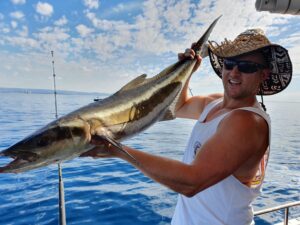
Cobia, also known as Black Kingfish or “Crab Eater” (Rachycentron canadus), are a highly prized gamefish found along the Gold Coast and Queensland coastline. Known for their size, power, and challenging fight, Cobia are a dream catch for any offshore angler. Whether you’re a seasoned fisherman or trying your first Gold Coast offshore charter, understanding their habits, habitats, and the best techniques will help you land these magnificent fish.


Why Cobia Appear on the Gold Coast

Cobia frequent the Gold Coast waters year-round, but their numbers peak between May and November.Seasonal fishing guide Cobia Several factors contribute to this seasonal abundance:
  • Whale migration providing cover and attracting baitfish

  • Slower reef currents during cooler months

  • Spawning of local reef species

  • Annual mullet and tailor runs

  • Whitebait movement along the coast

  • Manta ray migration


Cobia Habitat and Behavior

Cobia often hang around reefs, wrecks, ledges, and other structures. Like “lazy dogs,” they conserveOffshore Cobia catch energy while opportunistically feeding on small reef fish, crabs, and other bait. These fish also shadow whales and manta rays, feeding on scraps and baitfish that gather around these large marine animals.
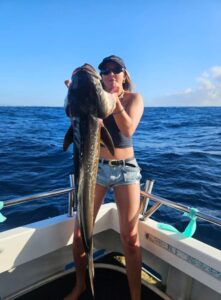
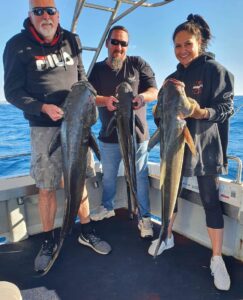
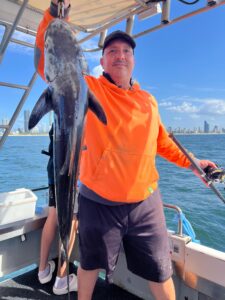
Cobia are found in shallow reefs of 5m to deep waters up to 100m, often near artificial structures, buoys, and Fish Aggregating Devices (FADs). They prefer spots with a high concentration of crustaceans and baitfish, making such areas prime targets for anglers.


Size Limits and Bag Limits

  • Queensland: Minimum 75cm, bag limit 2

  • NSW: No minimum size, bag limit 5


Where to Catch Cobia on the Gold Coast

The Gold Coast and surrounding areas offer some of the best Cobia fishing in Queensland. Look for:A cobia caught while deep sea fishing off the gold coast

Cobia often move in loose schools, so scanning reefs and structures carefully is essential for spotting feeding or resting fish.


Best Baits for Cobia

Live baits are highly effective:

  • Yakka, Pike, Slimies

  • Mullet, Tailor

  • Squid or Cuttlefish

  • Crabs, Small Bonito, Squire, and Bream

Dead baits also work well:

  • Butterflied fillets

  • Large strip baits

  • Whole squid and prawns

  • Combinations of these baits


Recommended Tackle and Setups

Live Bait Fishing:

  • Line: 30–80lb braid or monocobia fishing on the Gold Coast

  • Leader: 60–150lb

  • Rod: 40–100lb

  • Reel: 6000–12000 series

Rig tip: Use a double-hook snell rig with a pea sinker to keep baits naturally presented near the bottom. Drift fishing or downrigger setups help keep baits in the strike zone without spooking the fish.

Artificial Lures:

  • Line: 30–60lb mono or braid

  • Leader: 40–100lb

  • Rod: 30–100lb

  • Reel: 5000–12000 series

  • Lures: Soft plastics (jerk shads, paddle tails, grubs), squid/crab imitations, micro jigs (20g–300g)

Bright colors work well at dawn and dusk, while natural tones are ideal during the day.


Drift and Anchor Fishing

  • Drift fishing with live or dead baits over reef edges is highly productive.

  • Use minimal weights to allow natural drift without spooking Cobia.

  • An open bail arm keeps better contact with the bait for strike detection.


Handling, Preservation, and Cooking

  • Bleed your catch immediately by slicing the gills.cobia on a fishing charter

  • Use a brain spike and ice slurry to maintain freshness.

  • Cobia flesh is versatile and delicious: crumbed, pan-fried, baked, steamed, or in salads and sandwiches.

  • Add herbs, lemon, or garlic for maximum flavor.

Cobia are also called Black Kingfish, Blackie, or Crab Eater, and are a standout species in Queensland waters.


Final Tips for Gold Coast Cobia Fishing

  • Use a fish ID app or guidebook to ensure correct species identification.

  • Fish during peak months (May–November) for the best chance at trophy-sized Cobia.

  • Focus on reefs, wrecks, and areas with abundant baitfish and crustaceans.

By following these expert tips, techniques, and baiting strategies, you can maximize your chances of landing a monster Cobia on the Gold Coast.

Broadwater Inshore Fishing Charters – Gold Coast

Gold Coast Inshore Broadwater Fishing Charters

Gold Coast Broadwater Fishing Charters. In this case morning and afternoon fishing charters depart at 7am and 11am. Our boats head out from the Spit pontoon at Muriel henchman drive Main beach. Accordingly, these four-hour calm water fishing trips are perfect for beginners, kids and experts alike. Great fun for the whole family. Furthermore, our friendly experienced crew members will teach you the best techniques to catch a wide range of estuary fish species.

Notably the species of fish we chase are Tailor, Flathead, Jewfish, Bream, Whiting, Trevally, Mangrove jack, Estuary cod, shovel nose shark, and more.

Inclusions on our Broadwater fishing charters

  • All the required bait and Shimano fishing tackle.
  • Icy cold bottled water.
  • Legal sized fish gilled, gutted, iced and bagged.
  • Our expertise, fishing tips and guidance.

Estuary information

The Gold Coast Broadwater stretches north from Southport. Past Labrador, Biggera Waters, Runaway Bay, Hollywell and Paradise Point. That is to say the Broadwater is protected by The Spit (to the South) and South Stradbroke Island (to the North). The Broadwater extends all the way up to the southern end of Moreton bay.

  • Total catchment area = 63.94 kilometres2
  • Major tributaries = Nerang River, Coomera River, Pimpama River and Behm Creek.
  • Other tributaries = Biggera Creek and Loders Creek

Broadwater Boats

Both of our boats are available for private charter for group bookings. Great for parties, bucks’ days, corporate events. Furthermore, both of our quality charter fishing boats are equipped with onboard toilets. As well as comfortable padded seating and full cover over our back decks, for protection from the elements. In addition, our boats are in current survey as per Australian maritime safety authority regulations. Of course, both are fully equipped with all required safety equipment as well. We advise all of our customers to listen and communicate with our friendly experienced fishing guides. This will ensure an enjoyable and safe day out on the Broadwater. Likewise, we will also brief you on the safest methods of how to use the fishing equipment that’s provided. In particular we advise all of our customers to bring a hat, sunscreen, a spray jacket and snacks.

More information

If you would like more information. Please feel free to call our friendly staff on +61 7 55109622 if you are interested in our other options, such as our deep sea fishing charters Gold coast

Book A Deep Sea Fishing Adventure Today – True Blue Fishing Charters

Book Your Gold Coast Fishing Adventure Today

Experience the thrill of the ocean with True Blue Fishing Charters, where booking your next Gold Coastcharter fishing for mulloway fishing adventure is fast, easy, and secure. Our online booking portal allows you to check availability and reserve your spot instantly—no waiting for callbacks or confirmation emails.

Simply select your preferred fishing charter, choose your date from the calendar, follow the prompts, and complete your booking. We accept Visa, Mastercard, American Express, and JCB, with no hidden fees—just the advertised price of $130 per person.

Why Choose True Blue Fishing Charters?

At True Blue Fishing, we live the dream every day, offering half-day and full-day Gold Coast fishingTuna Fishing Gold Coast charters for beginners and experienced anglers alike. Our deep sea fishing trips explore the stunning waters along Queensland’s Gold Coast, starting from the Gold Coast Seaway and heading out to the best local reefs.

Onboard, our expert skipper and deckhand guide you every step of the way, teaching the techniques needed to land your trophy fish. Whether you’re chasing Snapper, Mackerel, Wahoo, Marlin, Tuna, Jewfish, or Cobia, we provide all the bait, tackle, and expert advice to make your fishing day unforgettable.

Our charters are family-friendly, welcoming women and children, ensuring everyone enjoys a safe and fun experience. With years of local knowledge and a dedication to providing the best Gold Coast fishing experience, True Blue Fishing Charters is your go-to choice for an adventure at sea.

Don’t wait—book your Gold Coast fishing charter today and experience the excitement of deep sea fishing the Aussie way!

Snapper – Pearl perch Closure – Gold Coast – True Blue Fishing

Snapper Fishing Closure – Gold Coast – Queensland

Unfortunately fisheries have imposed a closure on Snapper and Pearl perch stocks. In fact the closure applies to the whole of Queensland and also includes Snapper stocks off the Gold coast. While we don’t really feel that local Snapper stocks on the Gold coast are in serious decline. We are not totally opposed to the idea either. Above all, if it helps secure great gold coast snapper stocks for future generations. Then all well and good.

Below is an extract from the official statement from Queensland government. The full statement can be found here.

Snapper and pearl perch will be no-take species in Queensland waters for one month starting 15 July (from 12.01AM).

Minister for Agricultural Industry Development and Fisheries Mark Furner said this new closure would apply to all fishers – commercial, charter and recreational.

“This seasonal closure is similar to spawning closures for Barramundi and reef fin fish species. Which have been critical to ensuring the sustainability of these fisheries,” Mr Furner said.

“During this closure, I encourage fishers to target other species and take advantage of the fish aggregating devices (FADs) that have been installed along the South East Queensland coast.

“We are taking this step because snapper and pearl perch stocks are depleted and we need to take the pressure off. To ensure there are fish for future, we need to take action now.”

Plenty of fish in the sea

Moving forward, as far as fishing charter operators are concerned. We will simply focus our attention on the Fishing For Giant Trevally Gold Coast Australiamany other target species that are available throughout July and August. Firstly winter is prime time for chasing species like Cobia, Trag, Kingfish, Tuskfish, Mulloway, Tuna and many more. Furthermore if by chance you do happen to catch a quality snapper. All is not lost, we will take some great pics of you holding it. Before carefully releasing the fish. Certainly there is a fair amount of satisfaction in letting a big fish swim off to fight again another day. In addition, you will have photos and memories that will last a life time.

Have fun while maintaining sustainable stock levels

While we all love to take home a nice feed for our families to enjoy. Fishing is not about indiscriminately killing and keeping everything that is hauled over the railing. At Gold coast fishing charters we support sustainable fishing and abide by all rules and regulations stipulated by Qld fisheries.

Bag limits and minimum sizes

True blue aussie fishing chartersWe love to see our customers take home some dinner as well as fond memories. Fair and reasonable size and bag limits apply to most species. In fact you can keep anything you catch provided its legal.

More Information – Book a charter

If you would like more information about our Gold coast fishing charters feel free to give us a call on 07 55109622