Freshwater Fishing Spots – Gold Coast

Freshwater Fishing Spots – Gold Coast – Scenic Rim

When people think of fishing the Gold Coast. They tend to think of offshore big game fishing or exploring the vast expanses of our estuary system. Freshwater fishing doesn’t immediately spring to mind. However, the Gold coast and nearby Hinterland and Scenic rim regions have a range of options available.

Dam and Impoundment Fishing Near the Gold Coast

There are several dams and freshwater impoundments that are within an easy couple of hours drive fromAustralian Bass Gold coast the Gold Coast. Importantly these dams are well stocked with various freshwater fish species, and a stocked impoundment permit is a must have.

Hinze Dam

Hinze Dam is the closest option. The Hinze Dam is located 5km west of Nerang on the Gold Coast. The dam is freshwater and restricted to electric powered vessels, sail craft and paddle craft only. Fishing is permitted along the shoreline at the Eastern boat ramp, Western boat ramp and paddle craft launch point and from restricted vessels on the dam. stocked by the Hinze Dam Fish Management Committee. The dam is stocked with Australian bass, golden perch, Mary River cod, Saratoga and silver perch.

Maroon Dam

Maroon Dam is stocked by the Maroon-Moogerah Fish Management Association. The dam is stocked with Australian bass, golden perch, Mary River cod and silver perch.

Maroon Dam is located just over 20km west of Rathdowney. Fishing and water sports are popular activities at the dam. There are no vessel restrictions at the dam. Fishing is permitted along the shore of Slater Park and Maroon Dam Day Use Area and on the dam from vessels.

Moogerah Dam

Fishing freshwater for BassMoogerah Dam is stocked by the Maroon-Moogerah Fish Management Association. The dam is stocked with moogerah dam fishingAustralian bass, golden perch, Mary River cod and silver perch.

Moogerah Dam is located amongst the spectacular scenery of the Scenic Rim, an hours drive south west of Brisbane. The dam is a popular location for fishing and water sports. There are no restrictions on the vessel types that can be used. Boats and kayaks are available for hire at Lake Moogerah Caravan Park.

Clarrie Hall Dam

Clarrie Hall Dam is located on Doon Doon Creek – a tributary of the South Arm of the Tweed River, some 15 kilometres south-west of Murwillumbah. The dam has a catchment area of 60 square kilometres and a usable storage capacity of 15,000ML.

The Australian bass in the dam are in excellent condition and this Summer there have been some fish caught over 50cm.

Wyaralong Dam

Wyaralong Dam is stocked by the Logan and Albert Fish Management Association Inc. The dam is stocked with Australian bass and Mary River cod.

Wyaralong Dam is located at the base of Mt Joyce north-west of Beaudesert. The dam is restricted to electric powered vessels and paddle craft only.

Freshwater Fishing Gold Coast and Scenic Rim River Systems

Tweed River

The river flows generally north east, joined by eight tributaries including the Oxley and Rous riversfreshwater fishing Gold Coast beforefreshwater fishing spots gold coast reaching its mouth at its confluence with the Coral Sea of the South Pacific Ocean. The upper reaches around the towns of Murwullimbah and Uki is a great area to flick lures or flies at the local Bass.

Nerang River

The Nerang River Catchment is the largest and most significant river system on the Gold Coast. Major tributaries = Mudgeeraba Creek, Bonogin Creek, Wyangan Creek, Worongary Creek, Gin House Creek, Little Nerang Creek, Crane Creek and Mooyumbin Creek.

Logan and Albert Rivers

The Logan and Albert Rivers are located in the Scenic Rim, Logan and Gold Coast local government areas of the South East region of Queensland, Australia. The 184-kilometre (114 mi)-long river is one of the dominant waterways in South East Queensland that drains the southern ranges of the Scenic Rim and empties into Moreton Bay.

Coomera River

The Coomera River is a perennial river located in the South East region of Queensland, Australia. Its catchment lies within the Gold Coast and Scenic Rim Region local government areas. The upper reaches hold good numbers of Bass, Mangrove jack and even the occasional Barramundi.

Freshwater fishing Gold Coast can be very rewarding for those who are willing to don their hiking boots and explore the upper reaches of the many creeks and tributaries. Both Currumbin and Tallebudgera creeks fish well for bass during the summer months. Further west in the Scenic Rim, Christmas creek and Running creek are well worth a go too.

In conclusion the Gold Coast and surrounds have many great fishing opportunities for the avid and adventurous angler. However, if chasing freshwater species isn’t your thing and you prefer the wind and salt spray and the excitement of the open ocean, check out our Gold coast deep sea fishing charters.


How to Get The Most Out of Your Charter

Fishing Charters – How to get the most out of your experience.

There are some major advantages to using a commercial charter boat for your fishing requirements. Especially when travelling long distances away from home. You will find most charters, while fairly priced, will still cost you a reasonable sum of money. It is critical that you make the most of your time onboard the boat. Unfortunately, some fishing charter customers don’t get as much value, or as many fish as they possibly could. Read on for some great advice on how to get the most out of your charter.

The Captain and Crew

A big part of what you get for your money is the experience and local knowledge of your captain and his deck hand. Therefore, you should pay close attention to all the briefings and the valuable advice that the crew offer to you. Furthermore, most charter captains know the local area and fishing techniques like the back of their hand. Thus, by listening to your crew and paying careful attention to their demonstrations, your fishing technique will improve. If you are unsure of anything, don’t be afraid to ask questions either. Your crew will be happy to help.

Sit or Stand on Your Charter

kingfish caught off the gold coastDeep sea fishing charters Gold coast are most suitable for those who are in fairly good physical shape. In other words, you really need the ability to be able to stand up and fish on a boat that is constantly rocking with the waves. Indeed, most good fishing charter operators will still happily accommodate the less able and find them a comfortable spot to sit. Nevertheless, those who are standing up with their rod tips closer to the water, tend to have a faster reaction to bites and a more consistent hook up rate.

In short if you are physically able to stand and concentrate on watching and feeling for bites. You will vastly improve your chances of achieving a good catch. While this may be true, those who do need to sit and fish can still achieve reasonable results. Provided they are holding the rod and concentrating. Bottom fishing rods that are left in rod holders unattended don’t catch fish and generally just create tangles. Usually resulting in you upsetting other fisho’s on board. Holding your rod and paying attention is the key to success.

Sea Sickness

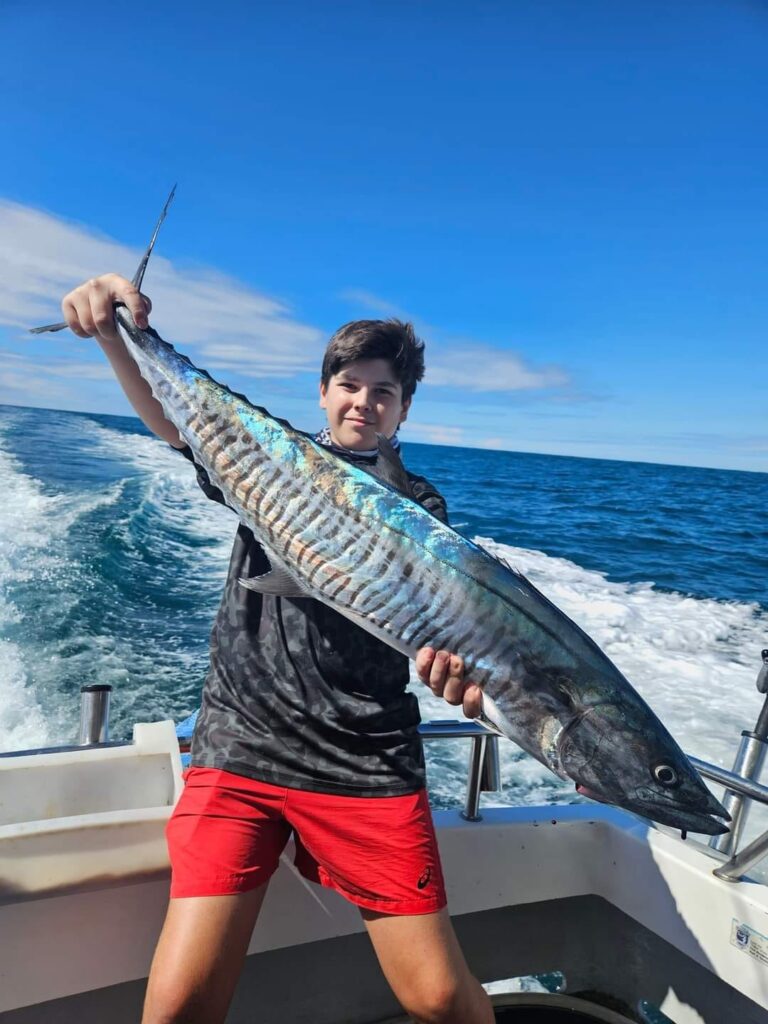
In a nutshell a bout of sea sickness can and will ruin your day! While this doesn’t sound pleasant, there areSpanish mackerel caught on the Gold coast a few simple steps that one can take to avoid this scenario. First and foremost, it is highly advisable not to hit the town and drink excessively the night before your scheduled departure. Copious amounts of alcohol and the open ocean are a recipe for disaster. Consequently, if you turn up drunk, you most likely won’t be permitted to board the boat. We recommend you get a good few hours’ sleep and have a healthy breakfast before boarding.

If you have never been out on the ocean before, and are unsure if you will suffer from seasickness, it is advisable to visit your local pharmacist. Importantly they will be able advise what is best for you. Most reputable chemists stock a variety of motion sickness preventatives. Accordingly, it’s better to invest a few dollars to prevent sea sickness to make your day a more enjoyable one.

Weather Considerations. Hot or Cold

Gold coast tuskfishAnother extremely important aspect to consider is the local weather conditions, it is important to dress appropriately to suit the season. For example, if rain is forecast its advisable to bring along a spray jacket, if it’s hot dress comfortably but take along a jumper or jacket just in case the conditions change. Suitable nonslip shoes are also advisable. Finally, you don’t want to wear your best clothes, fishing can be messy, and you don’t want to ruin your favourite outfit.

Make it a Day to Remember.

To sum up, if you heed the important advice we have provided in this article, it’s guaranteed that you will have a far more enjoyable offshore fishing trip. Being prepared and knowing what to bring and what to expect will enrich your overall experience. Being sick or cold isn’t nice and is easily avoidable. You have paid good money to have fun, be sure to get the absolute best value for money out of your day out on the ocean.


Pearl Perch, How to Catch Them on the Gold Coasts Reefs

Pearl Perch Gold Coast.

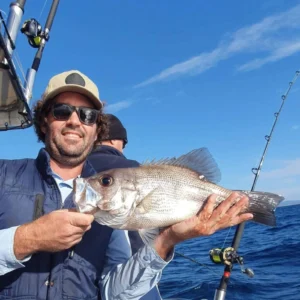
Chasing Pearl perch off the Gold coast can be a very rewarding experience. Pearlies as they are commonlypearl perch called, can be found along the east coast between Port Macquarie in NSW and as far north aspearl perch off the Gold coast Rockhampton in Qld. Pearl perch are a demersal bottom dwelling fish species that inhabit the local reef systems. They prefer deeper water, and you’re most likely to find them in 40-100 metres.

Your best chance to get on the pearlies is to chase them in deep water. They prefer rugged lumpy reef structure and they also seem to like to man-made reefs and ship wrecks.
A quality depth sounder and the know to use and read it accurately is critical. Pearlies form tight schools and tend to stack up on one on another.

Gold Coast Pearl Perch – Suitable baits.

Pearlies are not particularly fussy eaters they will happily devour most flesh baits, pilchards or squid. The key is to make sure its fresh and in good condition. Similarly they also respond well to nicely presented live baits such as Yellowtail scad or Slimy mackerel. However if you cant get hold of quality bait. Or don’t have time to waste catching live bait, these quality table fish will also take knife and soft plastics jigs too.

Deep Sea Fishing Tackle and rigs for Pearlies.

pearl gold coastAlthough one doesn’t need super heavy tackle to catch Pearlies. One should keep in mind that other larger species such as Cobia, Kingfish, Amberjack, Cod and Sambos. Also tend to inhabit the same areas as pearl perch. In other words a good quality overhead or spinning reel loaded with a minimum 15kg line will get the job done.

A simple paternoster rig with circle hooks and a snapper lead attached is a tried and proven method for catching these deep dwelling fish. However, if you prefer to fish light. When wind and current permit. Lighter ball sinkers with a snelled rig will allow you to slowly sink a bait to them. As a bonus you may pick up Snapper and other species as the bait slowly sinks through the water column.

Fishing The Gold Coast.

Pearl perch can be caught off the Gold coast year round, but tend to be more prolific through the cooler months. The 50 fathom grounds are the most productive for pearlies, but reasonable numbers also come off the 36 fathom reefs too. And to a lesser extent they are also sometimes known to show up in closer in depths of 24 fathoms, but they tend to be smaller specimans.

A safe reliable boat is your only option to get to these fish. For instance a boat of 6 metres or above with quality engines. If you don’t own a seaworthy boat. Another great option is to gather up a bunch of family and friends and charter a fishing boat for a full day trip. for more information

please call our friendly staff on 07 55109622


Currumbin Fishing Charters | Offshore Deep Sea Fishing | True Blue

Currumbin Fishing Charters

Offshore Reef & Game Fishing with True Blue Fishing Charters

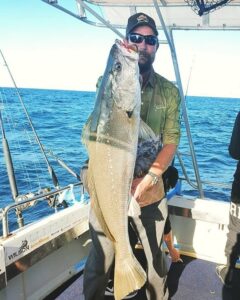
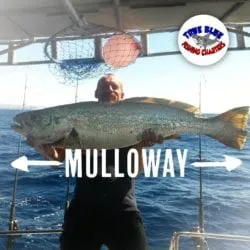
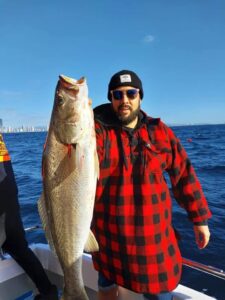
Looking for reliable, high-quality Currumbin fishing charters? True Blue Fishing Charters offer somemulloway caught off Currumbin of the best offshore fishing experiences on the southern Gold Coast, with fast, comfortable vessels, experienced skippers, and proven fishing grounds only a short drive from Currumbin.

Our charter boats depart daily from Muriel Henchman Drive, Main Beach, just 20 minutes north of Currumbin, making us a convenient and popular option for anglers staying in Currumbin, Palm Beach, Tugun and Coolangatta.


Offshore Deep Sea Fishing Near Currumbin

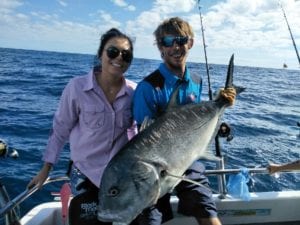
True Blue Fishing Charters operate seven days a week (weather permitting) and offer both half-dayGiant Trevally and full-day offshore deep sea fishing charters. Our trips target a wide range of prized pelagic and bottom-dwelling species depending on the season and conditions, including:

  • Snapper

  • Spanish & spotted mackerel

  • Wahoo

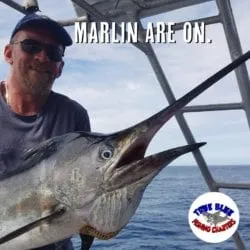
  • Marlin

  • Tuna

  • Jewfish (Mulloway)

  • Cobia

  • Kingfish and more

Whether you’re an experienced angler or a first-timer, our friendly and knowledgeable crew are there to guide you every step of the way.


Best Value Fishing Charters Near Currumbin

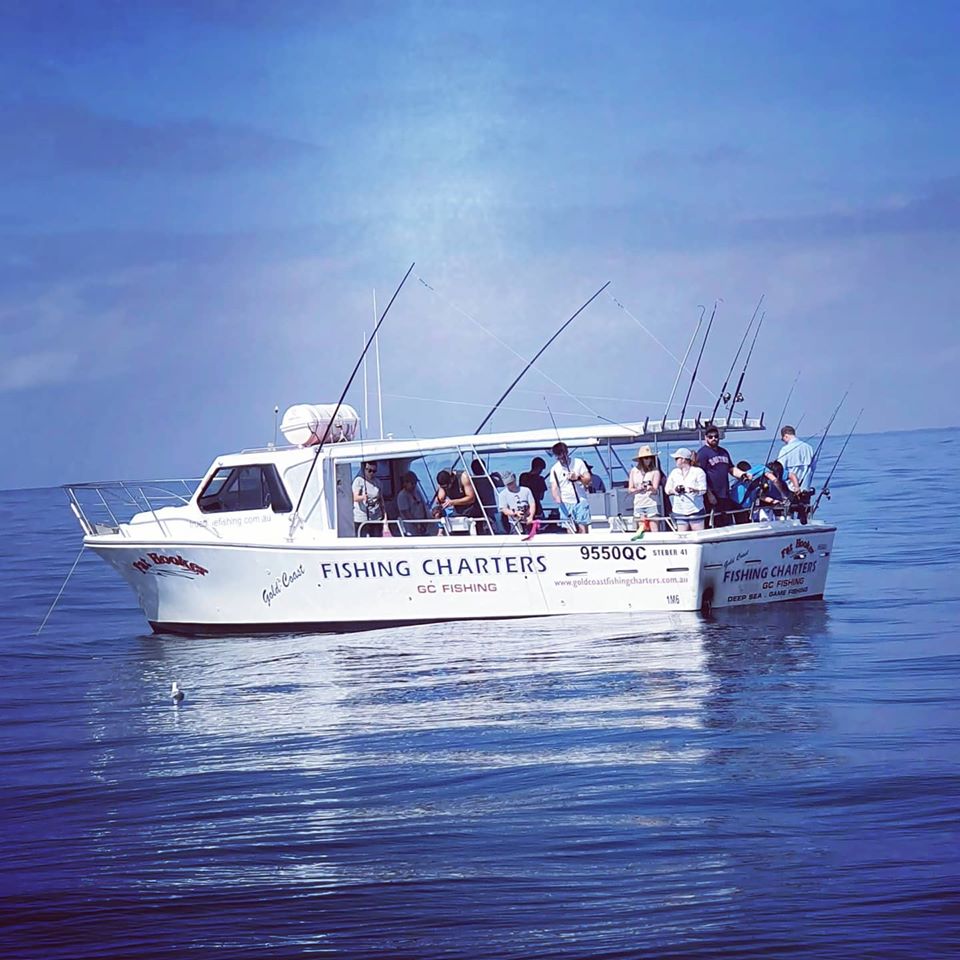
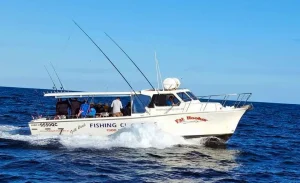
Our tournament-winning owner-operators have decades of experience fishing the local reefs andMV Fat Hooker Gold Coast deep sea fishing charter boat offshore grounds east of the Gold Coast Seaway. This local knowledge gives you the best possible chance of getting onto quality fish.

We supply all bait, quality tackle and expert instruction, so you can focus on enjoying the day and catching fish. Our skippers are passionate about fishing and work hard to ensure every trip delivers a safe, productive and enjoyable experience.


Modern, Comfortable Charter Boats

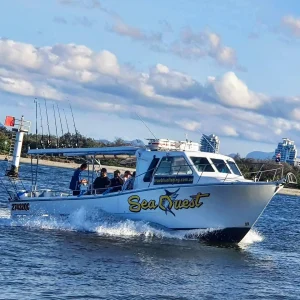
True Blue’s Deep Sea Fishing Charters Gold Coast operate large, stable and professionally maintained vessels designed specifically for offshore fishing. Our boats Fat Hooker and Seaquest are among the most respected charter vessels on the Gold Coast.

Both boats feature:

  • Spacious fishing decks

  • Onboard toilets

  • Shaded areas for comfort

  • Powerful engines for fast travel to the fishing grounds

This means less travel time and more time fishing the productive reefs offshore from Currumbin and the wider southern Gold Coast.


Why Choose True Blue for Currumbin Fishing Charters?

  • Over 20 years of local charter experienceCurrumbin fishing for snapper on a charter

  • Professional, friendly and safety-focused crew

  • Premium tackle and bait included

  • Great value half-day and full-day trips

  • Ideal for individuals, groups, families and visitors

From serious anglers to holidaymakers chasing a memorable day on the water, True Blue Fishing Charters deliver some of the best fishing trips near Currumbin.


Book Your Currumbin Fishing Charter Today

Experience the excitement of offshore fishing on the southern Gold Coast with a team that knows these waters inside and out.

📞 Call us on 07 5510 9622
🌐 Visit our website for fast and easy online bookings

Prawning on the Gold Coast: Complete Guide to Catching Prawns

Gold Coast Prawning Guide: Species, Seasons, Locations & Techniques

Your Practical Guide to Prawning on the Gold Coast

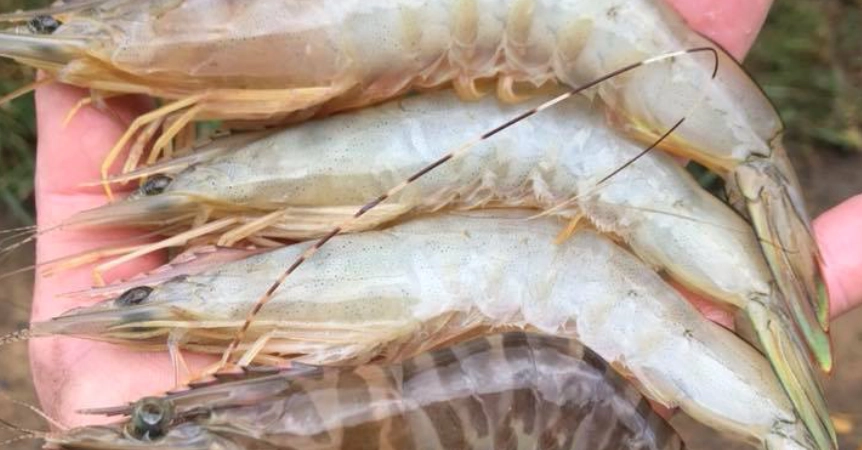
Gold Coast prawning is one of South East Queensland’s most popular and rewarding fishing activities. Withgold coast prawning extensive estuary systems, bays, rivers and coastal waters stretching from northern NSW through to Queensland, the Gold Coast offers excellent opportunities to target multiple prawn species throughout the year.

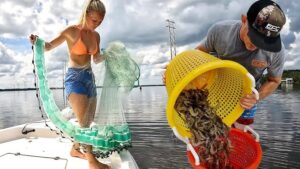
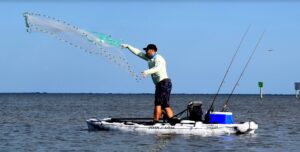
Whether you’re cast netting banana prawns in deep holes, scooping schoolies in the shallows, or spotlighting tiger prawns around drains and weed beds, understanding prawn species, seasons, locations and gear will dramatically improve your success.


Common Prawn Species on the Gold Coast

Banana Prawns

cast netting, prawning on the Gold coast(Penaeus merguiensis, Penaeus indicus)
Banana prawns are one of the most sought-after species for Gold Coast prawning. Found from Shark Bay in Western Australia, around the Top End and down to northern NSW, they can grow up to 34cm in length.

Season: November to May
Habitat: Estuaries, bays and deep holes (5.5–12m)
Best Method: Cast nets, especially top-pocket nets


School Prawns

(Metapenaeus macleayi)
School prawns are common from mid-Queensland to the Victorian border and are especially abundant in shallow estuaries and river systems.

Season: November to May
Size: Up to 25cm
Habitat: Shallows, drains and small holes (2–8m)
Best Method: Scoop nets, haul nets and cast nets


Tiger Prawns

(Penaeus monodon)
There are three main tiger prawn varieties encountered locally:

  • Black Tiger Prawn (farmed – year-round)

  • Brown Tiger Prawn (wild – peak February to May)

  • Grooved Tiger Prawn (wild – peak February to May)

Size: Up to 33cm
Habitat: Weed beds, drains, shallow flats and deeper holes
Best Method: Spotlighting with scoop nets, cast nets (QLD)


Eastern King Prawns

(Penaeus plebejus)
Eastern kings range along the entire east coast of Australia and are mainly caught offshore by commercial trawlers.

Size: Up to 30cm
Habitat: Offshore reefs and deeper coastal waters


Coral Prawns

Found along the east coast around reefs and rubble bottoms. Mostly taken as bycatch by trawlers.


Mantis Shrimp

Although not true prawns, mantis shrimp are often encountered while prawning. Over 125 species exist in Australian waters, from estuaries to depths exceeding 1500m.


Gold Coast Prawning Bag Limits

  • Personal limit: 10 litres per personcast netting prawns

  • Boat limit: 20 litres (two or more people)

⚠️ Bag limits apply to all prawns in your possession, including those at home in fridges, freezers or used as bait.


Prawn Life Cycle & Spawning

Most prawns live fast-paced lives, spawning multiple times before dying within one to two years. Females release hundreds of thousands of eggs per spawn, with larvae drifting shoreward into estuaries, bays and shallow reefs.

Banana, tiger and school prawns migrate upstream into estuaries during juvenile stages, feeding and growing rapidly before returning offshore to spawn after around 12 months.


Where to Find Prawns on the Gold Coast

Banana Prawns

  • Deep estuary holes and bay channels

  • Preferred depth around 6m

  • Often avoid shallow water during daylight to escape bird predators

School Prawns

  • Shallow flats, drains and sand holes

  • Particularly common in northern NSW river systems

Tiger Prawns

  • Weed beds, drains and gutters

  • Less schooling behaviour than banana prawns


Using Sounders for Gold Coast Prawning

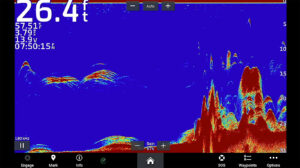
southport reef fishingModern sounders with down scan and side scan are extremely effective for locating prawns, especially banana prawns in deeper water.

  • Thin bands, dots or pyramid shapes indicate light prawn concentrations

  • Thick schools can completely white out the sounder

  • Casting behind the boat is often most productive, as you’ve just driven over the prawns


Best Nets for Gold Coast Prawning

Top Pocket Cast Nets

  • Best all-round net

  • Ideal for 4–30m depth

  • Fast sink rate, excellent spread

  • Most popular among serious prawners

Bottom Pocket Nets

  • Best for shallow water (up to 3m)

  • Effective around drains and weed beds

Top & Bottom Pocket Nets

  • Mid-depth water (1–6m)

  • Slower sink but versatile

Drawstring Nets

  • Ideal for deep water and snaggy bottoms

  • Allows retrieval before hitting bottom


Scoop Nets & Haul Nets

  • Scoop nets are excellent for spotlighting in shallow water

  • Haul nets are highly effective for school prawns in drains and flats (where legal)


Net Weights: Chain, Lead or Rings?

  • Chain: Fast sink, more snag-pronecast netting throw

  • Lead: Slower sink, fewer snags

  • Rings: Mid-sink rate, noisier

Personal preference plays a big role—try different setups to find what suits your style.


Handling, Storage & Cooking

  • Prawns have sharp defensive spikes on the head and tail

  • Place prawns straight into an ice slurry with salt for best quality

  • Shallow-water prawns often contain more grit

  • Best eaten fresh or within three weeks of freezing

Prawns are incredibly versatile in the kitchen—perfect for BBQs, curries, pastas, stir-fries, cocktails and more.


Responsible Prawning on the Gold Coast

Always take only what you need and correctly identify your catch. Fish ID apps and reference books are valuable tools, and when in doubt, take a photo and release the prawn.

Responsible prawning ensures healthy stocks and great fishing for future seasons.

Mahi Mahi Gold Coast Fishing -Dolphin fish -Dollies

A comprehensive guide to fishing for Mahi Mahi.

Written by Anthony Coughran from Fishing Fun Gold Coast

Your fish of the month is Mahi mahi………

Mahi mahi ( dolphin fish) Corphaena hippurus

Mahi mahi means very strong in Hawaiian.
We are so lucky to have the dolphin fish fishery we have in Australia. Locally we have all the government implemented FAD’s, pro fisherman trap lines and drum line which hold schools of dollies off our coast each year. As they migrate down our coast and chase the warm water boundaries.

Tips and techniques:

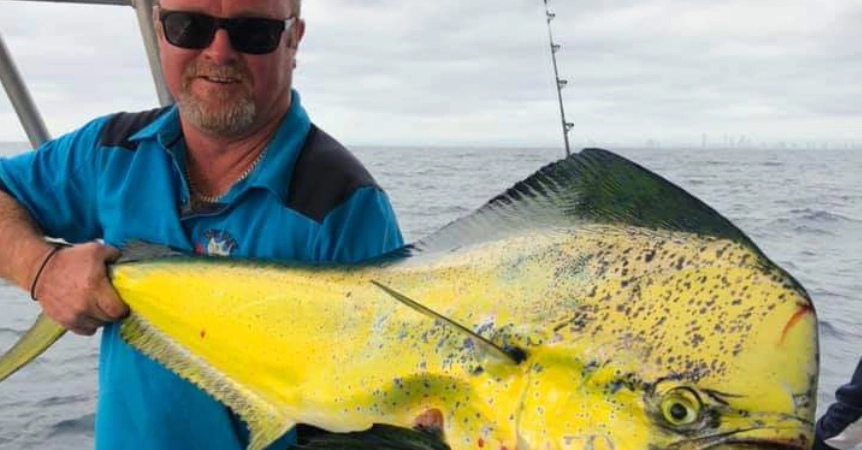
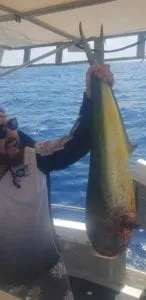
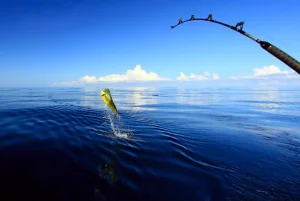
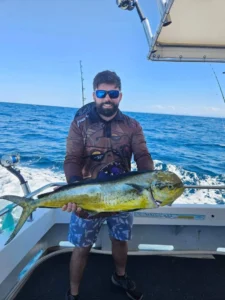
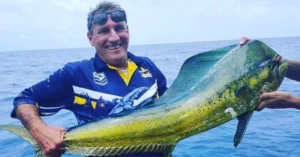
One of the prettiest fish in our oceans. The bright yellow belly, electric blue/ green top and bright electricMahi Mahi caught on the Gold Coast blue spots all over it are so charged up when first landed. Fishos are often disappointed with the colour as it fades really fast once out of the water and dispatched. So a quick pic as soon as you catch it will show off their amazing colours.
Lifespan and movement:

Dolphinfish are one of the fastest growing and shortest-lived fish in our waters. They usually grow about 1kg in the first 6months of their lives and can reach about Fishing Gold Coast, Mahi mahi fishing 10kg after a year. Their estimated growth is up to 25kgs and around 210cm after two to four years. Estimated to only live to 2-4years and are highly fecund. Producing about 58,000 – 1.5 million eggs per spawn. These numbers increases as fish length increases and they spawn very frequently once matured. They prefer to hang in schools with a large bull as head of the pack with his Haram of cows in tow. But can be solitary hunters as well. Normally when you find one they will have mates nearby.

Dollies can be found in most current lines, spawn lines, around floating objects such as drift wood, bread crates, Palm fronds, floats, buoys, markers, FAD’s, drum line and trap lines from close reefs out to the shelf. Summer is the best time to catch dollies off our coast as they migrate south after the warm to cold water buffer zones.

Bag and size limits for mahi mahi:

Qld: 50cm or greater bag of 5Game Fishing Adventures on the Gold Coast: Marlin, Mackerel, Wahoo, Mahi Mahi, and Sailfish
NSW: 60cm – 110cm a bag of 10
110cm or greater a bag of 1 max combined bag of 10
Bait fishing for dollies:
Pilchards:
An unweighted half or whole pillie can often get the fussiest of dollies to bite. Once you have found the schooled up fish.
Dead baits:
slimmies, yakkas and squid. A whole unweighted dead bait can also be very deadly on these gold bars of goodness.

Live baits:

Livies are still a very effective way to score dollies. Live yakka’s, slimmies, squid, pilchard and scad’s. Again slimy mackerel used as live baiton an unweighted or light weighted set up will often score the bigger dollies out of the pack.
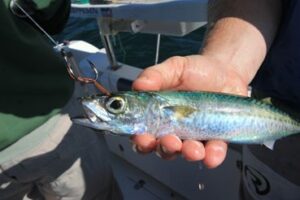
Skipping gar: also works when trolled past the packs or FAD’s. But you really need to find a school for them to work well.
Bait set ups for dollies:

Set up always depends on the size of the fish you are fishing for. A lot of the time the dollies around the FAD’s are only small to medium. So up to a meter. So 15- 30lb braid and 20- 50lb leader is all that is needed. But you may have to pull out the bigger gear when you find the bigger dollies.

Like when using live baits. You want 30- 80lb braid to 40-120lb leader. A 17lb – 40lb 5-7ft rod with a 5000 – 8000 spin reel will work well for dead baits. But you might want to go to a 30lb – 80lb 5ft rod with a 15-25w over head for the big Dollies on live baits.

Artificial’s for dollies: Skirts:

Trolled skirts are still one of the best ways to catch big Dollies. You cover lots of ground while you fish. 5- 9inch skirts work best. Cut face skirts still catching more off our shores then most other skirts. You want to troll your skirts between 6- 12knts depending on your skirts. But you will be able to tell if they are skipping or not.

You want your skirts sitting at the front side of the waves created by your wake of the boat.

Fish will only hit the lures at the bottom of the waves. So set your lures at the right length so ensure you get the best out of them. Teasers help a lot as well. Try and always line you tow up so you are heading away from the sun. As you will always get more hook up towing away from the sun. Fish find it harder to see when trolling into the sun.
Best colours: pink, purple, blacks and lumo.
Set up: 20- 80lb mono. Over head set ups work best but jigging rods with 12000 spin gear works well too.

Metals:

20- 80g metals work well on dollies once located. FADs, buoys, markers, floats and drifting debris all fish well with metals once have you located the fish sitting on it. Casting in front of these how to catch mahi mahiobjects and ripping it past them will result in hook ups. If they are not hitting this technique. Cast out in front of the object. Let it sink for about 20- 60 secs. Then rip it in. Speed is essential to hook ups. Faster the better. A slower wobbling rod tip retrieve also works well.

Colours: doesn’t matter as its all about the speed of retrieval.
Set up: 15- 40lb braid 20- 50lb leader. 17- 50lb rod and a 4000- 10000 reels.

Hard bodied lures:

Deep and shallow diving lures also catch dollies. Again best used towed past a FAD’s or floating debris. Ex rap, laser pro and pacemakers are just a few and all work well.
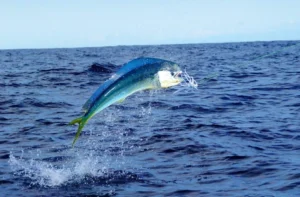
Colour: red head, slimy and purples work well.
Set ups: same as your skirt gear. 20-80lb mono. Over head or heavy spin gear.

Popper/ stick baits:

Dolphinfish, Once you have found them. You can start to throw stick baits and poppers around them. These lures particularly work best around the FAD’s and floating debris.
Colours: red head, slimy, green and gold and purples.
Set up: you want heavy spin gear. 20- 50lb braid to 30- 80lb leader On a 7ft rod and a 5000- 12000 reel.

Micro jigs:

Jigs are used in much the same way as metals. Drop to the bottom once you have found the Achilles up fish. Then rip them back up through the water column. Faster the better.
Colours: doesn’t matter it’s about how fast you work them.
Set up: same as metals. 20- 40lb braid 30- 50lb leader. 7ft rod with a 4000- 8000 reel.

Plastics:

Used much the same way as metals. Let them sink and rip them in. Heavy jig heads. 5- 9inch profiles.
Colours: greens, blues, pinks, purples and pearls.

Fish preservation and cleaning:

When caught you want to bleed you fish as it will let all the blood out of the muscles and flesh. A quick slice of the gill lining or the vain in throat, then a brain spike and straight onto ice or in an ice slurry will keep your catch in the best eating condition.

Eating:
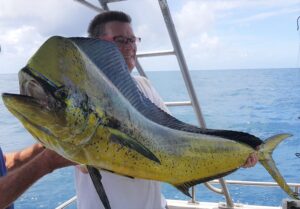
Fishing 24 fathom reefsMahi mahi are great on the chew and straight into an ice slurry or on ice once dispatched. Dollies are also very good raw ( shashimi ) but of soy and wasabi and it’s great. They are very nice crumbed and deep fried, pan fried, steamed, in a salad or on a sandwich, curried, garlic style or even just baked whole or whole on the bbq. Just add a few herbs, spices, lemon and garlic or what ever floats your boat and get into them.

They also freeze quiet well. As the flesh doesn’t form as many ice crystals as lots of other fish and is only one of a few fish I will actually freeze. But fresh is always so much better.
* Remember to only take what you need. As it’s not always necessary to keep your bag limit or more fish than you can eat that night.
* Caution is advised once fish is landed.

Take care:

They still have a lot of energy and are very strong and can often result in injury from hooks coming loose and in bedding into your flesh. A wet towel straight over its head and eyes is the best way to calm any fish.

Mahi mahi are also know as:
Dolphin fish, dollies, dorado and golden bars of goodness.
Having a fish ID app, fish ID books like Grants guide to fish or a fish almanac will help you identify the species you have caught. Which will mean there will be no confusion when you get back in or Offshore.

Book a charter

For Gold Coast deep sea fishing charter bookings and information feel free to call our friendly team on +61755109622
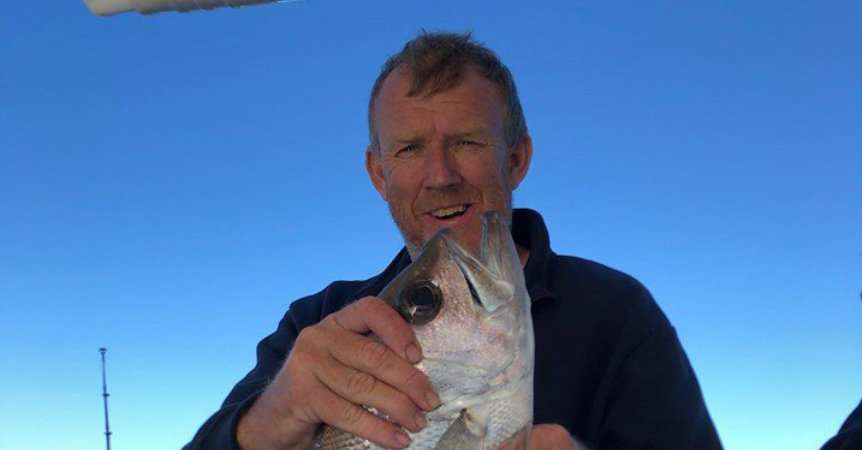
 

Best Techniques and Top Quality Gear

Best Techniques and Top Quality Gear on our Fishing Charters.

We love our fishing and are passionate about providing top quality fishing gear on our charters. It is ourfishing charters with top techniques and quality gear goal to connect our customers to quality fish and Fishing charters equipmentmore importantly land them. True blue offer a genuine deep sea reef and game fishing adventure. Our tours are suitable for beginners and seasoned anglers alike.
Top Quality Fishing Gear.

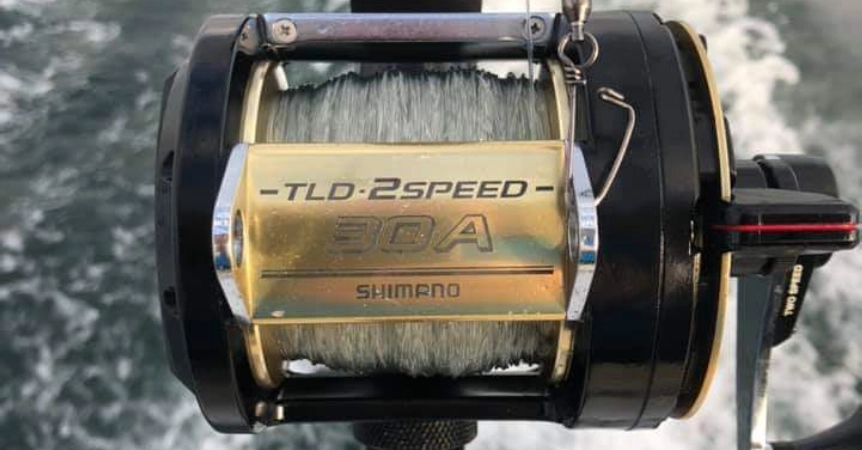
Our customers are provided with top quality fishing gear on our fishing charters. Both of our boats are equipped with quality outfits from Shimano,Top Gear supplied on our fishing charters Penn and Fin Nor. The equipment is well maintained, lubricated and serviced regularly to ensure reliability for our clients.

We only use tackle from reputable manufacturers that have been in the fishing business for many years. The tackle is relatively easy to use and our crews will demonstrate its operation. They will also provide any assistance you require to hook and land the big one.

Best Techniques.

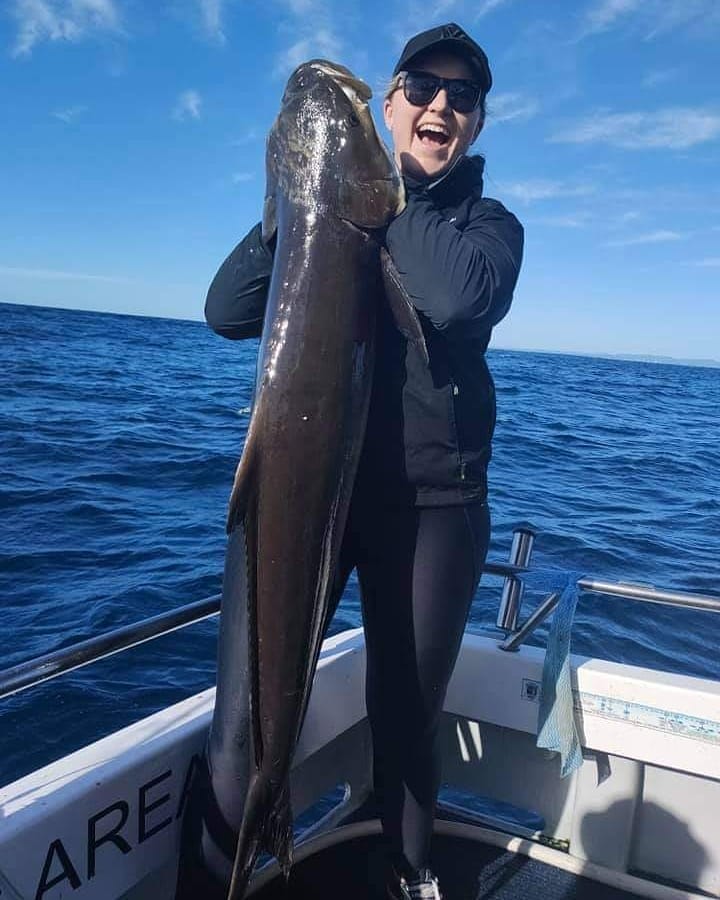
In order to achieve a great catch for our clients. True blue fishing utilise a range of different techniquescobia caught on a deep sea fishing charter suitable to the species biting and the conditions on the day of your charter. Our preference is for pinpoint accuracy and getting the fish right under the boat. Rather than aimlessly drifting all day, we like to mix it up a little bit. Drift fishing certainly has a place when conditions are favourable but can be hit and miss when the drift is quick. Drift fishing is also very uncomfortable when drifting side on when conditions are choppy.
When the wind and current aren’t co-operating, we find a well-positioned anchor over a rocky out crop will keep the boat over the fish. A constant burley trail will also effectively keep them in the strike zone below the boat. Most days the burley will also bring them up higher in the water column.

Your crew will actively set live baits and float lines for the benefit of clients. These baits attract predatory species such as Tuna, Mackerel, Marlin, Cobia, Wahoo, Snapper and many more. During the warmer months we also Troll lures to target the annual run of pelagic game fish species that follow the warmer currents that occur off the Gold coast.

Top Fishing Boats

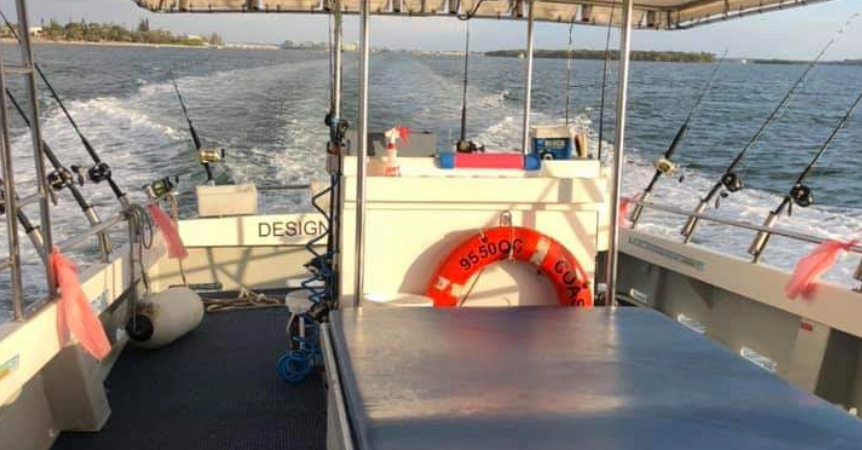
Spanish mackerelTrue Blue fishing charters operate two of the best fishing charter boats on the Gold Coast. Both vessels are equipped with top quality Furuno and Garmin fish finding equipment. The boats “Seaquest” and “Fat hooker” are comfortable smooth riding vessels. Powered by Turbo charged Cummins diesels combined with twin disc gear boxes. We get you out to the fish fast. Padded seats, full roof cover and on board toilets are all fitted for your comfort.
Full safety gear on board and fully insured. Get on board for a great day out fishing. Book Now.


Giant Trevally Gold Coast

Big Brutes

Giant Trevally Fishing on the Gold Coast – The Ultimate Inshore & Offshore Powerhouse 🎣💥

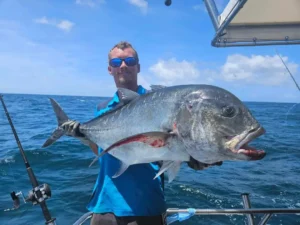
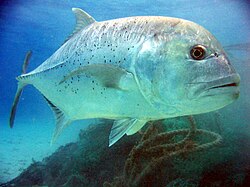
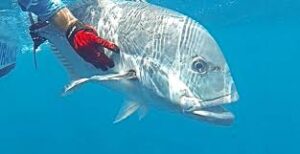
Few sportfish command as much respect from anglers as the Giant Trevally (Caranx ignobilis). MoreGiant Trevally caught on the Gold coast commonly known as GTs, these brutal predators are regarded as one of the hardest fighting fish pound-for-pound anywhere in the world. On the Gold Coast, Giant Trevally offer anglers an explosive and unforgettable fishing experience, whether hooked in shallow estuaries or on offshore reef systems.
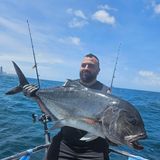
What Makes Giant Trevally So Special?

Giant Trevally are built for speed, power and aggression. With a top speed estimated at over 65km/h, GTs are ambush predators capable of devastating strikes on both lures and bait. Their muscular bodies, broad tails and relentless fighting style make them a true test of angler skill, stamina and tackle.

GTs can be encountered in a wide size range on the Gold Coast:
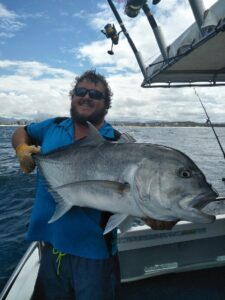
  • 1–2kg school fish commonly found in the Broadwater and estuary systems

  • Mid-sized fish along beaches, sand flats and rocky headlands

  • Trophy specimens up to 35kg around the Seaway walls, closer reefs and current lines offshore

It’s these larger models that elevate Giant Trevally fishing into elite sportfishing territory.


Where to Find Giant Trevally on the Gold Coast

Giant TrevallyOne of the great advantages of targeting GTs is their versatility in habitat. On the Gold Coast, they are regularly found across a wide range of environments:

Estuaries & Inshore Waters

  • Gold Coast Broadwater

  • River mouths and deep channels

  • Sand flats adjacent to drop-offs

  • Bridge pylons and man-made structure

Smaller GTs often patrol these areas in schools, feeding aggressively on baitfish and crustaceans.

Seaway & Headlands

The Gold Coast Seaway is a well-known GT hotspot, particularly around:

  • Rock walls

  • Current edges

  • Bait schools flushed through tidal flow

This is where anglers often encounter much larger, more aggressive fish capable of brutal first runs straight back into structure.

Offshore Reefs & Current Lines

Gold coast Giant trevallyThe biggest Giant Trevally on the Gold Coast are commonly encountered on:
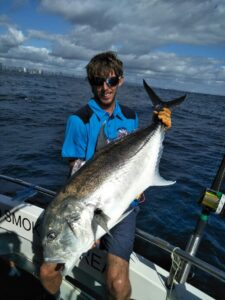
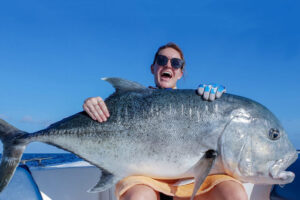
  • 12 fathom and 18 fathom reefs

  • Pressure points along reef edges

  • Areas holding bait under strong current

These offshore GTs are true brutes and require heavy tackle and precise technique to land successfully.


Best Time of Year for Giant Trevally Fishing

Giant Trevally are present on the Gold Coast throughout the warmer months, with peak activity typically occurring during late spring, summer and early autumn.

Warm water temperatures, increased baitfish movement and strong tidal flows combine to create ideal GT conditions. While smaller fish are caught year-round, the larger trophy GTs are most common during summer, particularly around reef systems and the Seaway.


Techniques for Catching Giant Trevally

Surface Poppers & Stickbaits 💣

GTs are famous for their violent surface strikes. When feeding aggressively, they will repeatedly smash:Gold coast fishing for giant trevally

  • Large surface poppers

  • Floating stickbaits

  • High-speed blooping presentations

Surface fishing for GTs is visual, adrenaline-fuelled and not for the faint-hearted.

Hardbody & Deep Diving Lures

Around structure and reef edges, GTs will ambush:

These techniques are particularly effective when fish are holding deeper during daylight hours.

Live Bait Fishing 🐟

Giant trevallyLive bait remains one of the most consistent ways to target large Gold Coast GTs.
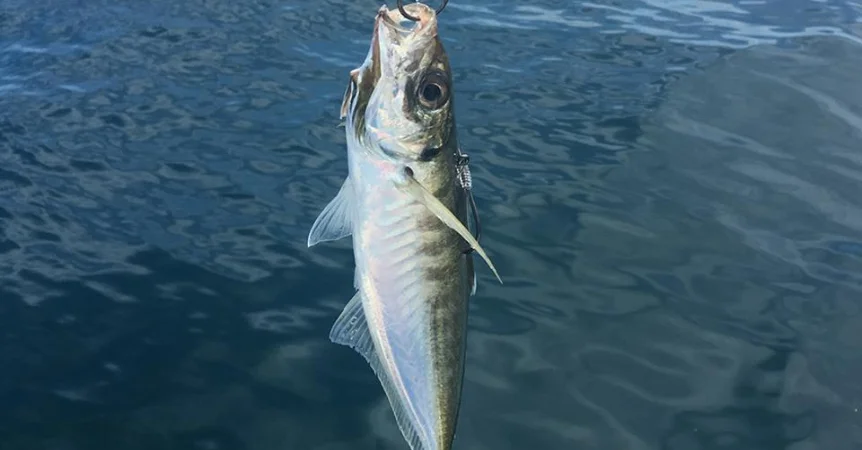
  • Live yakkas (yellowtail scad)

  • Slimy mackerel

  • Other local baitfish

Live baits fished near structure or while burleying for species like mackerel often result in surprise encounters with monster GTs.


Tackle Requirements – Don’t Underestimate GTs

Big Giant Trevally demand top-quality gear. Anything less risks instant bust-offs.Gold coast giant trevally

Recommended setup:

  • Heavy spin or overhead rod (PE6–PE8 for big fish)

  • High-drag reel with strong gears

  • 80–130lb leader

  • Heavy-duty hooks and split rings

GTs will test every component of your setup, and once hooked, there is no room for error.


Gold Coast GTs – A True Trophy Capture 🏆

While monster Giant Trevally aren’t an everyday catch on the Gold Coast, anglers fishing with bait in the water during summer are always in with a chance. Encounters often happen unexpectedly, particularly while targeting species like mackerel on the closer reef systems.

Each GT landed is a genuine achievement and a memory that stays with anglers for life.


Why Giant Trevally Are a Must-Target Species on the Gold Coast

  • Incredible strength and speedGTs gold coast

  • Explosive surface strikes

  • Accessible from estuaries to offshore reefs

  • One of Australia’s toughest sportfish

Whether you’re casting poppers at dawn, slow-trolling live bait near reef edges, or fishing current lines offshore, Giant Trevally fishing on the Gold Coast delivers world-class action.


🎣 Pro Tip

Always be prepared — GTs often strike when you least expect it. If there’s bait in the water and current on the move, a Giant Trevally could be only seconds away.

Live Bait Fishing Gold Coast

Productive Techniques – Live bait fishing Gold Coast.

Gold Coast Fishing Charters

A guide to live bait fishing on the Gold Coast. We use all of these techniques with great success on board our Gold coast fishing charters. Read on for some great local live baiting tips.

Despite an enormous range of various lure fishing styles used on the many target species these days, live bait fishing is one of the simplest and most effective techniques used for catching a myriad of prized species off the Gold Coast.
Anglers who seek out species such as Wahoo, Tuna, Marlin, Mackerel, Cobia, Mulloway, Mahi mahi, and even Flathead are regularly using live baiting techniques and often find them to be more successful than other techniques.

Locating live baits – Gold Coast Live Bait Grounds

Tuna used as bait for sailfish

There are plenty of options for catching livie’s around the Gold coast. Inshore, Mullet and Herring are plentiful and can easily be caught in a cast net. Ideal spots are around the sand flats, canal entrances and off the many public jetties scattered around the Broadwater. Yabbies are also easy to obtain at low tide on the many sand flats and mud banks in the Broadwater and southern Moreton Bay.

Live bait tips and techniques offshore, there is several local reefs approximately 1 nautical mile southeast of the seaway way wall. These rocky out crops hold Yakkas, Pike, Trevally and Slimies. These reefs are easily identifiable on a good day. There’s usually always boats there. Further out the 18 and 24 fathom reefs hold yakkas and trevally year-round and slimies seasonally. All can easily be caught on a simple bait jig. If they don’t respond to the jig by itself, add a little flavour to it. A squid tentacle, prawn or a small piece of fish flesh can make all the difference some days.

Catching and keeping livies

The most critical factor in live baiting is actually getting the right bait to use, matching the hatch so to speak. In Southeast Queensland, Yakka’s, Slimy mackerel, Herring, Mullet, Trevally, Pike, squid, and Tailor are all excellent offerings and easily available for those wanting to try their hand at live baiting. Mulloway gold coast live baiting

Mulloway

Some species have a minimum legal-size limit, which of course you will have to abide by even if you are only using the fish for live bait. Don’t be afraid to go big with your baits. I’ve witnessed many Marlin and big Wahoo taken on large Tailor and Trevally.

After you have caught your favourite baits, take care of your catch and look after them. The liveliest baits are usually the best baits. A decent size bait tank is a good start, with a good supply of recycled water circulating to ensure they stay alive until it’s time to use them.

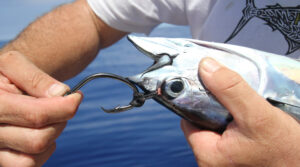
No matter the rig you choose to use, being gentle is critical for keeping the bait alive and healthy for as long as possible. For example, be careful handling your live baits so you don’t squash it or knock too many scales off. Using a glove or wet cloth helps. When it comes to inserting the hooks, be careful not to damage the internal organs and the lateral line of the live bait.

Live Bait Fishing Gold Coast – Rigs

Single hook rigs
Single hook rigs are used in smaller baits such as Herring, Mullet, Trevally, Yakkas, Slimy mackerel, and even small squid. There are several ways to rig livies using the single hook technique, but most are very simple and get the maximum possible life span from your selected bait. My personal favourite while fishing at anchor is a single hook through the shoulders. It allows the bait to swim naturally. Another great method is a hook through the nose. This works better when drifting. Bridle rigging using a rubber band is also a great technique.

Double hook rigs

Double hook rigs
Double hook rigs are useful with big baits or when the fish are shy and finnicky. A second stinger hook can produce good results. they do however tend to weigh the livies down a little more and obviously 2 hooks in it will also reduce the life span of the bait. Mahi mahi taken on a live bait

Live Bait fishing Gold Coast can be very productive and extremely rewarding for those who try it. We hope you enjoyed this article and if you would like to get out and learn more about live bait fishing Gold Coast. we would recommend you book one of our exciting half day fishing charters.

True Blue Aussie Gold Coast Deep Sea Fishing Charters

True Blue Aussie Gold Coast Fishing Charters- Gold Coast Fishing Charters

Half Day and Full Day Offshore Deep sea Fishing Charter Trips.

True blue fishing charters offer exciting deep sea reef and game fishing charters. Our boats depart dailygold coast fishing from True Blue Aussie fishing chartersMain Beach. Our Fishing Charter boats will have you travelling around The Spit before heading through the seaway and further out to sea for some fast action fishing. There’s a wide variety of fish in the Gold Coast’s semi-tropical waters. Including: Snapper, Jewfish, Cobia, Samson fish, King fish, Teraglin, Marlin,Tuna, Mackerel, Sailfish, Tusk Fish, Pearl Perch, Cod, Mahi Mahi, Wahoo.
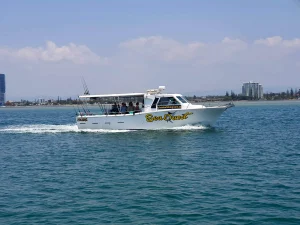
True Blue Aussie Fishing Charters Gold Coast

The abundance of fish, the vast array of species, the wildlife and the location all add up to the fishing adventure of a lifetime. A must do when you visit the Gold Coast!
True blue Aussie fishing charters friendly skippers and deckhands will offer all the assistance you need to ensure your day on the water with us is a memorable experience. Whether you’re a beginner or a seasoned pro, you will love our fishing tours. All our fishing trips include all bait, rods, True bluereels, quality fishing tackle and bottled water.

The boats are legendary Steber craft vessels made locally in Taree. Powered by economical turbo diesel engines, so we get you out to the reef fast! The boats have full length shade awnings and there is clean flushing toilets on board.
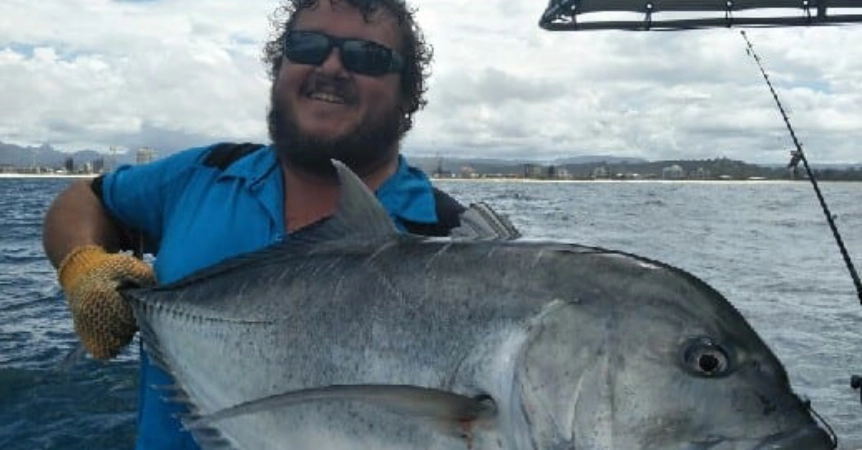
All fish are gutted & gilled, cleaned, iced down and bagged for you. You keep what you catch provided its legal!

True Blue Aussie Gold Coast Reef Fishing Charters are a proudly Australian owned and operated Family Business. Run by a team that is passionate about fishing and being on the water. Our friendly staff have the knowledge and the expertise to make your Gold Coast Charter both an enjoyable and rewarding experience. Book Instantly Online Or call our friendly staff on 07 55109622.