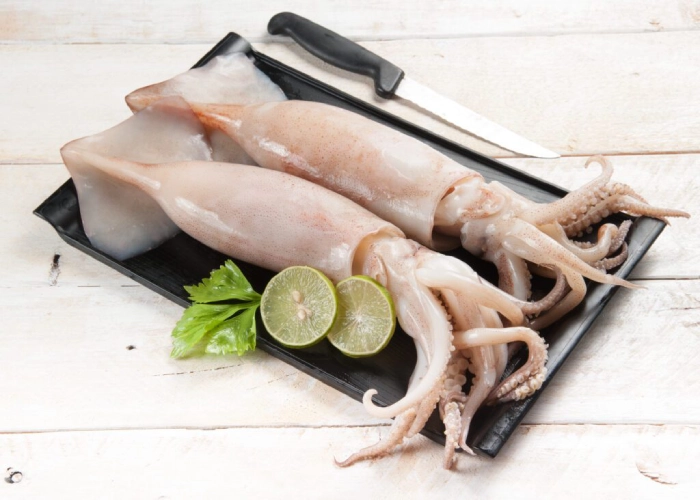
Squid Fishing Gold Coast – Brisbane – Tweed Heads
A Complete Local Guide
Squid fishing on the Gold Coast, Brisbane and Tweed Heads is both exciting and rewarding. Not only are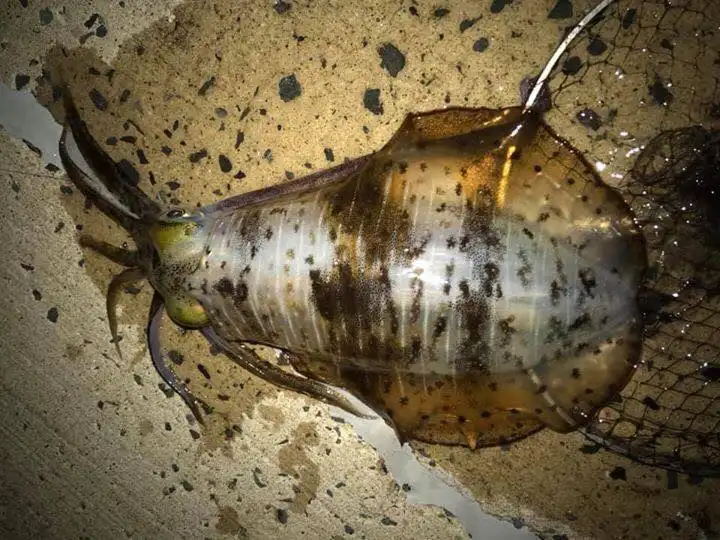 squid a top-quality table fish, they also make exceptional bait for a wide range of inshore and offshore species.
Regular contributor Anthony Coughran shares his expert knowledge on local squid species, where to find them, and the best techniques to consistently catch them in South East Queensland waters.
Squid Species Found in South East Queensland
(Cephalopods)
Australian waters are home to many species of squid, calamari and cuttlefish, with several commonly found around the Gold Coast and surrounding regions.
Cuttlefish
Giant Cuttlefish (Sepia apama)
Pharaoh’s Cuttlefish (Sepia pharaonis)
Cuttlefish are found right around Australia. Giant cuttlefish are commonly located over reefs and grassy seabeds, extending out toward the continental shelf. Pharaoh’s and smaller cuttlefish species prefer close coastal reefs, inshore reefs and seagrass areas.
They can grow up to 5kg and 52cm in length, and there are around 10 different cuttlefish species found in Australian waters.
Gould’s Squid (Arrow Squid)
(Nototodarus gouldi)
Gould’s squid are found from the Southern Great Barrier Reef, down through the southern states and across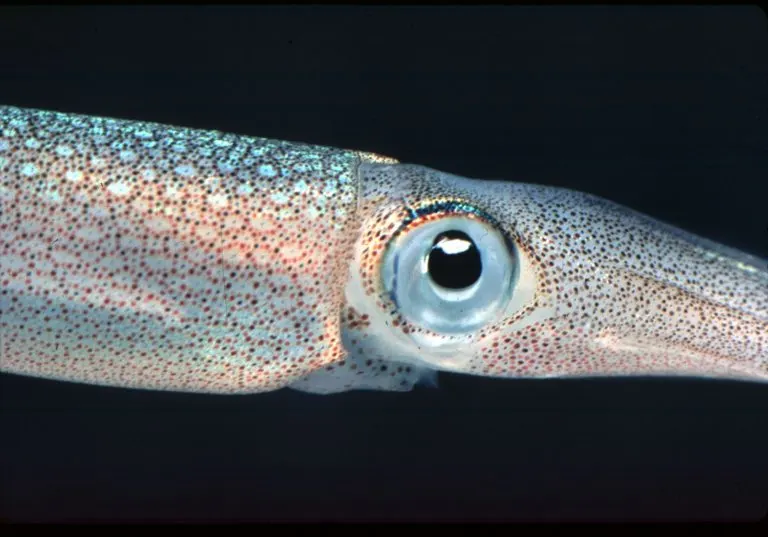 to Geraldton in Western Australia.
They are typically found in deeper water between 50–200 metres, although smaller squid often move into bays and estuaries during winter. Arrow squid can reach 1.6kg and 40cm, while estuary-based specimens are usually smaller.
They commonly hold around weed beds, riverbeds and channels, spreading out to feed at night.
Luminous Bay Squid
(Loliolus noctiluca)
Found along the entire east coast of Australia, from the Gulf of Carpentaria to Tasmania, luminous bay squid inhabit bays, estuaries and even brackish water.
They are usually found over reefs and seagrass beds in depths up to 50 metres. Easily recognised by their dark spots and yellow-pink colouring, they grow to around 10cm and have fins (wings) that are roughly half their body length.
Northern Calamari (Tiger Squid)
(Sepioteuthis lessoniana)
Northern calamari are found in nearshore waters, bays and estuaries from northern NSW, across northern Australia, and as far west as Shark Bay in WA.
They also inhabit offshore reefs to depths of 100 metres, growing up to 2kg and 42cm.
Southern Calamari
(Sepioteuthis australis)
Southern calamari are commonly found on inshore reefs, bays, estuaries and inlets from Brisbane, around the southern states and across to Shark Bay.
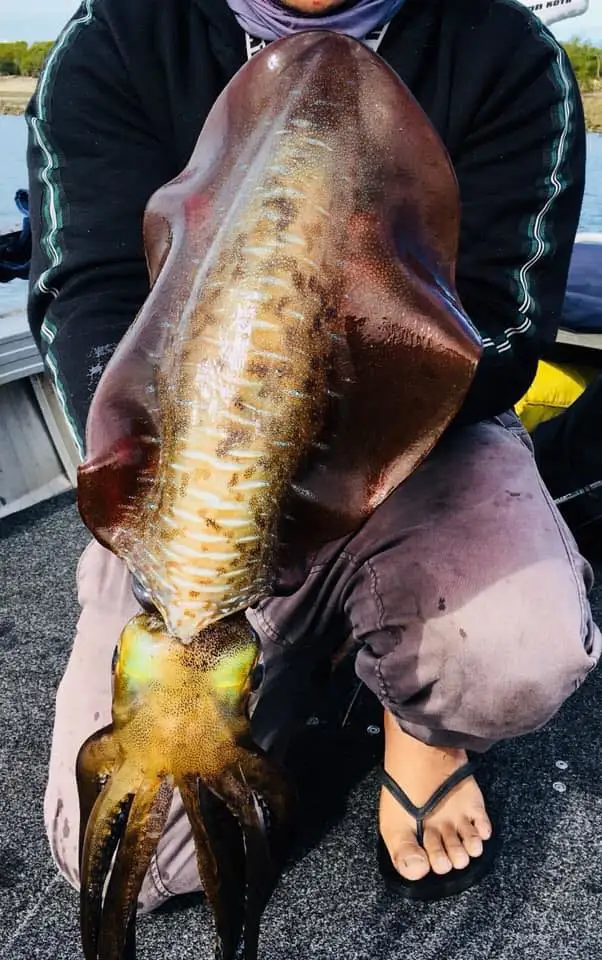
They can grow up to 4kg and 55cm. Squid size is always measured by mantle (hood) length, not including tentacles.
Squid Life Cycle and Spawning
Squid are fast-growing creatures. In the early stages of life, they can gain 10–15% of their body weight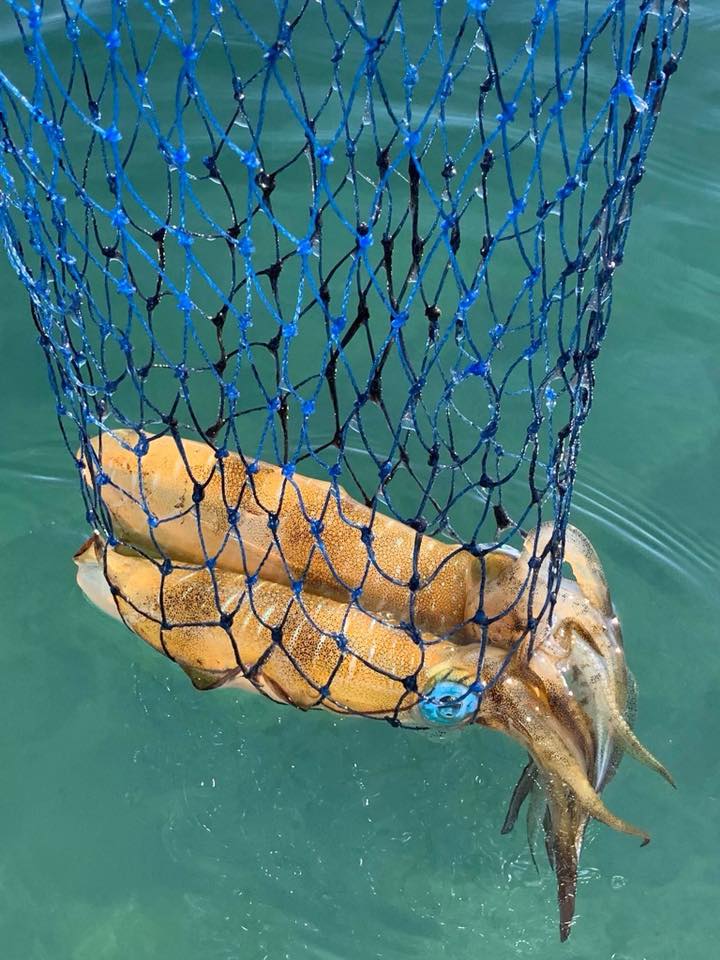 per day, averaging around 30% growth daily in some species.
Most squid live fast and die young, with an average lifespan of 12–18 months. Larger species such as giant squid and cuttlefish may live up to 3–5 years.
Female squid can lay up to 100,000 eggs. After spawning, both males and females die, providing an important food source for fish, birds, mammals and crustaceans.
Defence Mechanisms
Squid are masters of camouflage. They can change the colour and texture of their skin to match their surroundings, communicate with each other, hunt prey or evade predators.
If camouflage fails, squid release ink to confuse predators and escape.
Where to Find Squid on the Gold Coast
Tiger squid and arrow squid are commonly found in:
-
Gold Coast Broadwater
-
Moreton Bay
-
Hervey Bay
-
Inshore and close offshore reefs
-
Tweed Coast waters
They are most prevalent during winter and cooler months, hunting over weed beds, seagrass, coral and rocky reefs.
Squid feed on prawns, small fish, crustaceans and even other squid — yes, they are cannibalistic.
Best Time to Catch Squid
-
Depths: 0.5–5m in estuaries and bays, up to 100m offshore
-
Structure: Jetties, marinas, beacons and areas with artificial light
-
Tides: Two hours either side of high tide
-
Moon: Full moon is especially productive in shallow water
Best Baits for Squid Fishing on the Gold Coast
-
Banana prawns
-
Pilchards
-
Strip baits (mullet, tuna)
Using baited squid spikes under a float keeps the bait in the strike zone and makes it easier to detect bites.
Jigging for Squid
Jig selection depends on: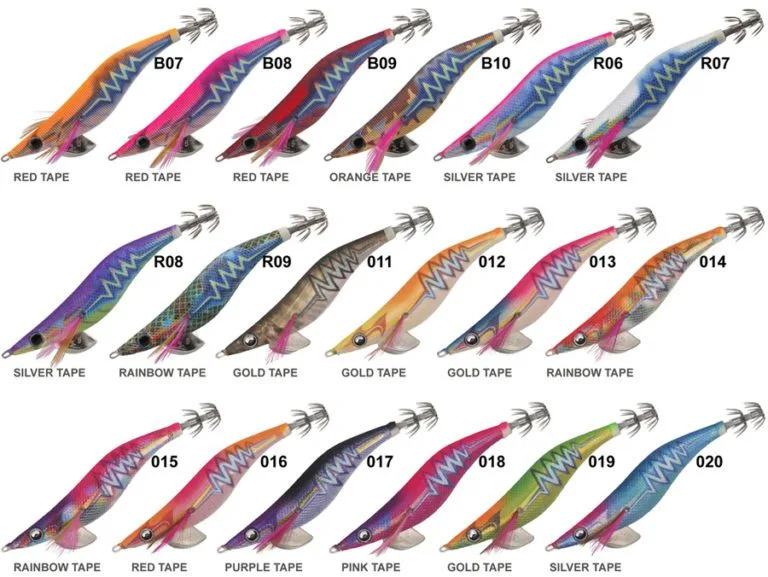
-
Water clarity
-
Light levels
-
Current
-
Depth
-
Weather conditions
Some days squid prefer 2.5 jigs, other days 3.5 jigs. Glow, UV, natural, black or white patterns all have their moments. Chin weights can help lighter jigs reach deeper water.
Running a jig under a float trailing behind the boat often outperforms actively worked jigs.
Jig Retrieve Technique
-
Cast out and allow the jig to sink near the bottom
-
Slow roll the retrieve
-
Add occasional hops and sharper whips
-
Adjust speed and action based on squid response
UV Lights and Artificial Lighting
UV torches help charge glow jigs and reveal how much UV they emit. Artificial lights attract baitfish, which in turn draw squid.
Drifting with lights on for a few runs, then without, helps determine what works best on the night.
Best Squid Fishing Tackle Setup
-
Line: 6–10lb braid or mono
-
Leader: 8–14lb
-
Rod: 2–4kg or 3–6kg
-
Reel: 1000–2500 size
This setup is perfect for both jigging and bait fishing.
Preserving and Cleaning Squid
To ensure tender meat, squid should be killed quickly. Squid have three brains, so using an EGI spike and rotating it correctly will instantly kill them. You’ll know it’s done properly when the body turns white.
Store squid on ice or keep them alive in a bait tank until heading home.
Cooking Tips
Soaking squid in kiwi fruit for 30 minutes to 3 hours helps tenderise the flesh. When frying, 50 seconds is the magic number — no more, no less — for perfectly tender squid.
Size and Bag Limits
Queensland
-
No size limit
-
Bag limit: 50 squid and cuttlefish (excluding tiger squid)
New South Wales
-
No size limit
-
General bag limit: 20 invertebrates
-
Southern calamari: 15 per person
Always check current regulations with QLD Fisheries or NSW DPI.
Final Thoughts
Squid fishing on the Gold Coast, Brisbane and Tweed Heads is incredibly rewarding. Squid are delicious on the plate and unbeatable as fresh bait for both inshore and offshore fishing.
Whether you’re fishing the Broadwater, local estuaries or heading offshore on a deep sea fishing charter, squid are well worth targeting.
Happy squidding! 🦑
Related Posts

Plan Your Next Charter
Chasing reef fish, game species, or a great day out on the water? Our crew is ready when you are.