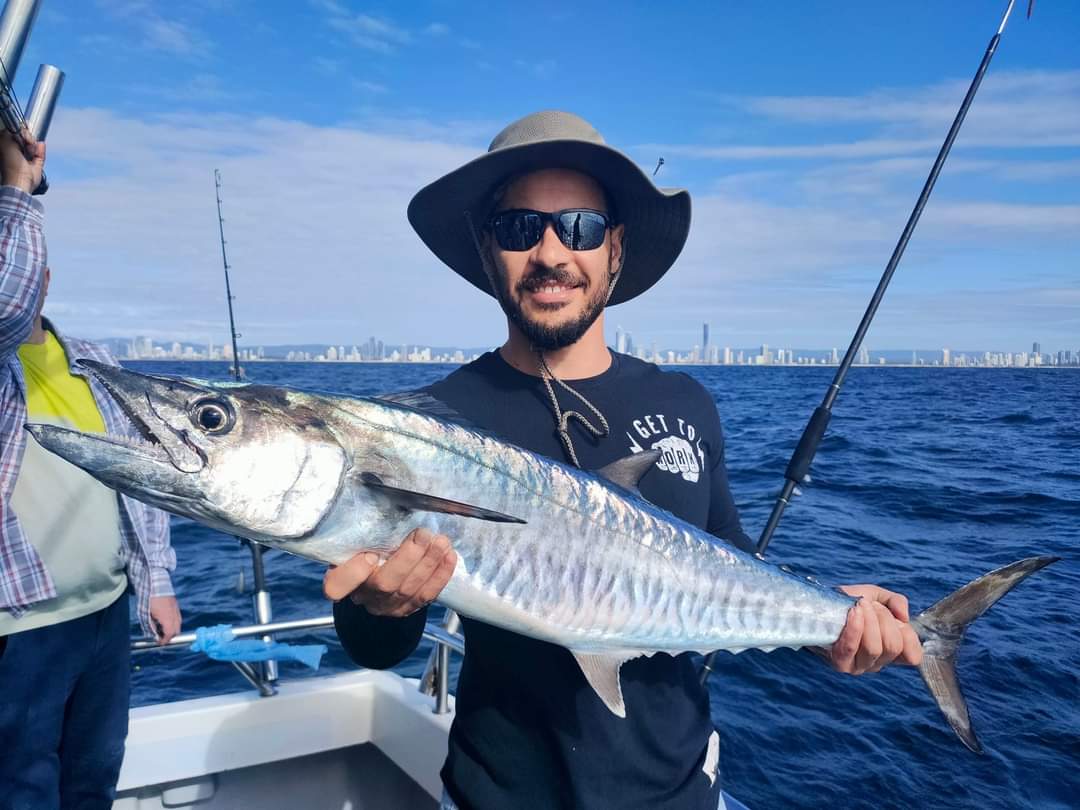
Catching Spanish Mackerel Off the Gold Coast – Techniques, Timing, and Top Locations 🎣🐟
Spanish mackerel are the heavyweights of the Gold Coast pelagic scene. Larger, more powerful, and often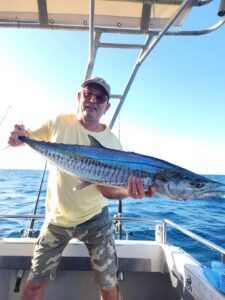 more cautious than their spotted cousins, Spanish mackerel are prized for their blistering runs and outstanding eating quality. When conditions are right, they can be found surprisingly close to shore, providing offshore anglers with thrilling action.
At True Blue Fishing Charters, Spanish mackerel are one of the most sought-after seasonal targets, particularly during periods of strong bait activity and clean ocean water.
Best Time to Catch Spanish Mackerel on the Gold Coast
Spanish mackerel favour warmer currents, with the prime Gold Coast season generally running from late 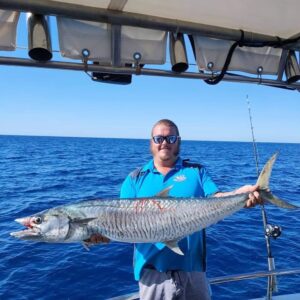 spring through to autumn. Peak captures often occur when baitfish numbers are high and ocean conditions stabilise.
Key Feeding Windows
⏰ Early mornings are consistently productive, especially just after sunrise when bait schools are active.
🌊 Tide changes, particularly the top or bottom of the tide, often trigger feeding runs.
🌬️ Light winds and clear blue water significantly improve success rates.
Spanish mackerel are less forgiving than spotted mackerel, making timing and conditions critical.
Spanish Mackerel Behaviour and Feeding Patterns
Spanish mackerel are fast, visual predators that hunt larger baitfish such as slimy mackerel, yellowtail, garfish, and bonito. They tend to patrol reef edges, pressure points, and current lines rather than feeding continuously on the surface.
Unlike spotted mackerel, Spanish mackerel often strike suddenly and retreat quickly, meaning missed opportunities can be costly.
Best Spots for Spanish Mackerel on the Gold Coast
Spanish mackerel are regularly caught on both inshore and slightly wider reef systems, particularly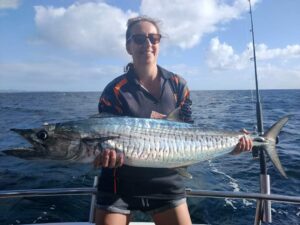 where structure concentrates bait.
📍 18 Fathom Reef – A consistent producer of larger fish
📍 24 Fathom Reef – Holds bait and current lines
📍 Mermaid Reef – Excellent during clean water periods
📍 Palm Beach Reef – Productive when bait stacks on the edges
These reefs act as natural ambush zones where Spanish mackerel intercept bait moving with the current.
Proven Techniques for Catching Spanish Mackerel
Slow Trolling Live Baits
One of the most effective techniques is slow trolling live baits, particularly slimy mackerel and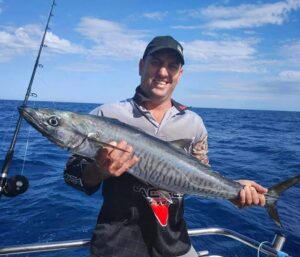 yellowtail. This method presents a natural, irresistible target and is ideal when fish are present but not aggressively feeding.
Key points:
🎣 Use wire or heavy fluorocarbon leaders
🎣 Troll slowly around reef edges
🎣 Keep baits swimming naturally
This technique regularly produces larger Spanish mackerel.
Trolling Large Hard-Bodied Lures
Spanish mackerel respond well to larger hard-bodied diving lures that imitate big baitfish. These lures can be trolled at moderate speeds and are especially effective when fish are actively hunting.
Natural colours with strong vibration often outperform overly bright patterns.
Fishing Dead Baits and Float-Lining
Fishing unweighted dead baits, such as whole pilchards or rigged slimy mackerel, can be extremely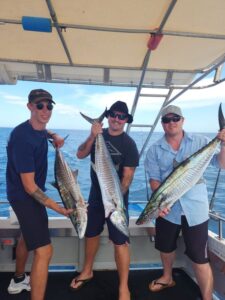 effective. Float-lining allows the bait to drift naturally back into the strike zone, particularly when a light burley trail is used.
This technique excels when Spanish mackerel are cautious or feeding deeper.
Casting Metal Slugs
When Spanish mackerel are feeding high in the water column, metal slugs cast long distances and retrieved quickly can draw aggressive strikes ⚡. This method is ideal when birds are working bait schools.
Heavier slugs allow longer casts and better depth control in strong current.
Eating Quality and Handling
Spanish mackerel are regarded as premium table fish 🐟🔥, offering firm, rich-flavoured flesh suitable for a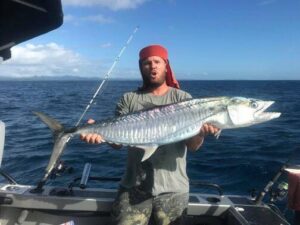 variety of cooking methods.
For best quality:
✔️ Bleed immediately
✔️ Ice thoroughly
✔️ Fillet and skin carefully
Spanish mackerel are excellent grilled, smoked, or prepared as steaks.
Conservation, Legal Size, and Bag Limits
Responsible harvesting is essential to protect Spanish mackerel stocks.
In Queensland waters:
📏 Minimum legal size: 75 cm
🎣 Bag limit: 1 fish per person (closed seasons apply)
Related Posts

Plan Your Next Charter
Chasing reef fish, game species, or a great day out on the water? Our crew is ready when you are.