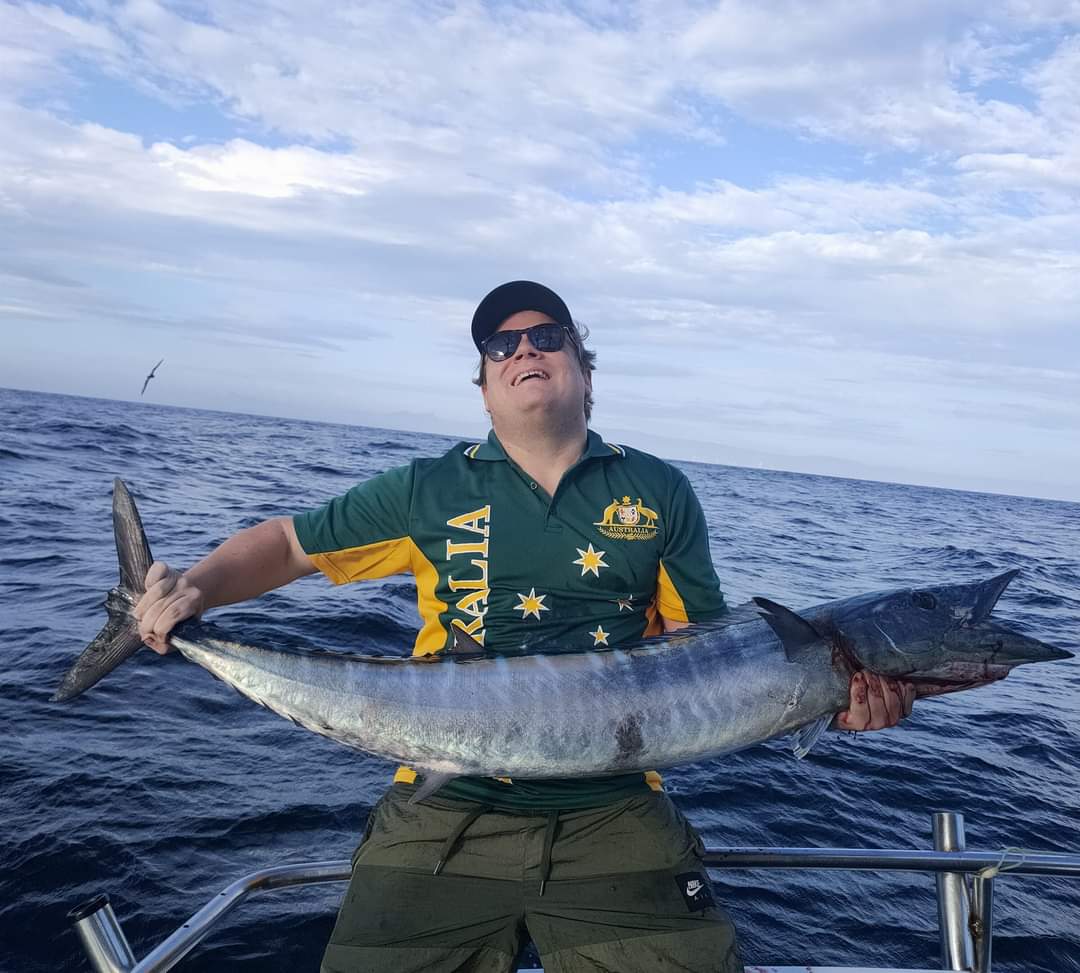
How to Catch Wahoo Off the Gold Coast: The Ultimate Guide to One of the Ocean’s Fastest Predators
Few fish ignite the same mix of excitement, chaos, and adrenaline as a wahoo strike. Known for blistering speed, savage hits, and unstoppable first runs, wahoo are one of the most prized pelagic species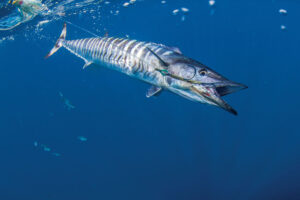 encountered off the Gold Coast. For anglers who love fast-paced offshore fishing, hooking into a wahoo is an unforgettable experience — and the Gold Coast is one of Australia’s most reliable places to do it.
With deep water close to shore, strong currents, and an abundance of bait, Gold Coast waters regularly produce quality wahoo, especially during the warmer months. Whether you’re an experienced offshore angler or someone planning their first bluewater trip, this guide covers everything you need to know about catching wahoo off the Gold Coast — from when and where to find them, to tackle, techniques, and charter options.
What Is a Wahoo?
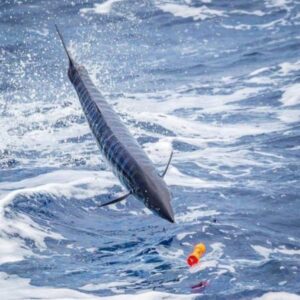
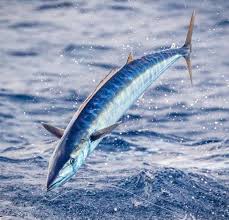
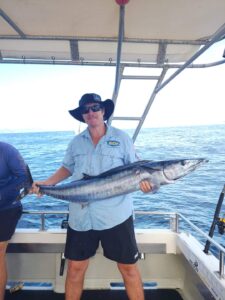
Wahoo (Acanthocybium solandri) are a member of the mackerel family and are instantly recognisable by 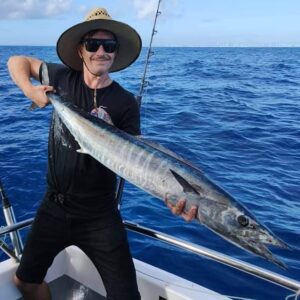 their long, torpedo-shaped body and striking vertical blue bars along a silver flanks. Built purely for speed, wahoo are considered one of the fastest fish in the ocean, capable of bursts exceeding 70 km/h.
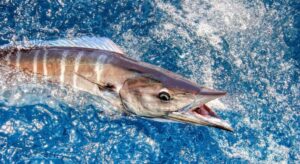
They are aggressive, highly visual predators that hunt near the surface and mid-water, often striking lures at full speed. Their razor-sharp teeth make them formidable opponents — and a nightmare for anglers who aren’t prepared.
Why the Gold Coast Is Prime Wahoo Territory
The Gold Coast’s offshore geography makes it a perfect environment for wahoo. Deep water lies close to shore, and the East Australian Current pushes warm, nutrient-rich water down the coast, carrying baitfish and pelagic predators with it.
Key reasons wahoo thrive off the Gold Coast include:
-
Close proximity of deep reefs and drop-offs
-
Strong current lines and temperature breaks
-
Large schools of baitfish such as slimy mackerel and bonito
-
Consistent summer and early autumn water temperatures
This combination means wahoo are often encountered while targeting other pelagic species such as tuna, marlin, mahi mahi, and mackerel.
When Is the Best Time to Catch Wahoo on the Gold Coast?
Wahoo can be caught year-round, but the peak season on the Gold Coast typically runs from late spring through summer and into early autumn.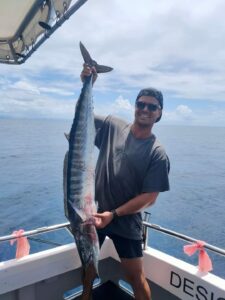
Best Conditions
-
Water temperature: 22–26°C
-
Months: November to April
-
Weather: Calm offshore conditions with defined current lines
They are often most active during periods of strong current flow and tend to feed aggressively when bait is pushed up high in the water column.
Where to Find Wahoo Off the Gold Coast
Wahoo are a blue water species, but they are frequently encountered around structure where bait congregates.
Key Areas Include:
-
Continental shelf edges
-
Seamounts and pinnacles
-
Current lines and colour changes
-
Areas with bait stacked mid-water on the sounder
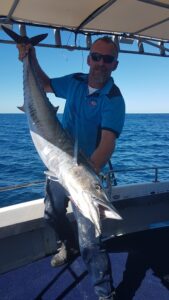
Many wahoo are caught surprisingly close to shore, sometimes only a short run from the Seaway, especially when conditions line up.
How Wahoo Feed and Why It Matters
Understanding how wahoo feed is key to catching them consistently. Unlike some pelagic species that school tightly, wahoo often travel alone or in loose packs. They rely on speed and ambush rather than endurance.
 Wahoo feed primarily on:
-
Slimy mackerel
-
Yellowtail scad (yakkas)
-
Bonito
-
Flying fish
-
Squid
They often strike at high speed from below or behind, which is why trolling is such an effective technique.
Best Techniques for Catching Wahoo
Trolling (The Number One Method)
Trolling is by far the most effective way to catch wahoo off the Gold Coast. Their aggressive nature and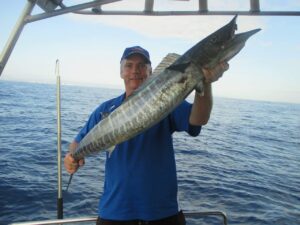 speed make them perfectly suited to this technique.
Key trolling tips:
-
Troll faster than you would for most pelagics (8–14 knots)
-
Focus on current lines and temperature breaks
-
Keep lures spread at different distances
-
Watch the sounder for bait high in the water column
A wahoo strike is unmistakable — violent, sudden, and often followed by a screaming reel.
Live Baiting
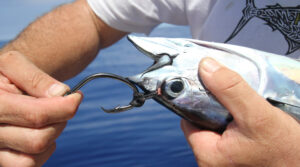
Live baiting is deadly when wahoo are feeding in a defined area.
Effective live baits include:
-
Slimy mackerel
-
Bonito
Live baits are often set:
-
Under balloons
-
On downriggers
-
Slow-trolled along reef edges
Be prepared — wahoo often hit live baits hard and fast.
Best Lures for Wahoo
Wahoo are not shy. In fact, flashy, high-speed lures often work best.
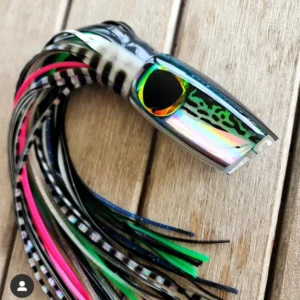
Popular Wahoo Lures:
-
High-speed skirted trolling lures
-
Metal jet heads
-
Bibless minnows
-
Deep-diving hardbodies
Colours that consistently perform well include:
-
Purple and black
-
Blue and silver
-
Pink and white
-
Natural baitfish patterns
Tackle and Gear Recommendations
Because of their speed and teeth, wahoo demand robust gear.
Rods and Reels
-
15–24kg trolling outfits
-
Overhead reels preferred for line capacity
-
High-speed reels for line recovery
Line and Leaders
-
24–37kg mono or braid
-
Heavy fluorocarbon or mono leader
-
Wire traces are essential to prevent bite-offs
Skipping wire is the fastest way to lose lures — wahoo teeth are unforgiving.
The Fight: What to Expect When Hooked Up
Wahoo fights are explosive rather than drawn-out. Expect:
-
An initial blistering run
-
Violent head shakes
-
Sudden direction changes
Good boat handling is crucial. Chasing the fish early can prevent being spooled, especially on lighter tackle.
Handling Wahoo Safely
Once landed, caution is critical.
-
Wahoo have extremely sharp teeth
-
They remain dangerous even on deck
-
Always control the head first
-
Use gloves and long-handled tools
Never put hands near the mouth until the fish is fully subdued.
Eating Quality: Why Wahoo Are So Highly Regarded
Wahoo are considered one of the best eating pelagic fish.
Table Qualities:
-
Firm, white flesh
-
Mild flavour
-
Excellent for grilling, sashimi, smoking, or ceviche
Proper bleeding and icing immediately after capture dramatically improves eating quality.
Don’t Have a Boat? Use a Gold Coast Fishing Charter
If you don’t have your own offshore-capable boat, fishing charters are the safest and most effective way to target wahoo off the Gold Coast.
Why Choose a Charter?
-
Access to proven fishing grounds
-
Experienced skippers who follow bait and current
-
Quality tackle and lures provided
-
No need to worry about weather or navigation
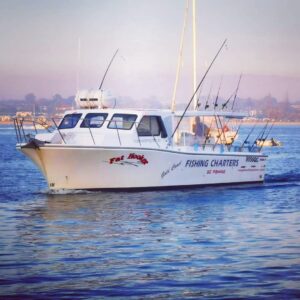
One of the most respected operators in the region is True Blue Fishing Charters. With decades of experience fishing Gold Coast waters, their skippers regularly encounter wahoo while targeting tuna, marlin, mahi mahi, and mackerel.
True Blue Fishing Charters offer:
-
Shared and private charters
-
All gear, bait, and tackle included
-
Fish cleaned and bagged after the trip
If wahoo are active, experienced charter crews know how to capitalise on the opportunity when it arises.
Tips to Increase Your Chances of Catching Wahoo
-
Watch for birds and surface activity
-
Focus on current edges and temperature changes
-
Run wire leaders at all times
-
Troll faster than usual
-
Be ready — strikes happen without warning
Final Thoughts
Catching wahoo off the Gold Coast is not about patience — it’s about preparation and speed. With the right conditions, gear, and techniques, these lightning-fast predators offer some of the most exhilarating fishing available in Australian waters.
Whether you’re trolling offshore reefs, live baiting current lines, or heading out with a professional operator like True Blue Fishing Charters, wahoo fishing on the Gold Coast delivers heart-stopping moments, unforgettable strikes, and some of the finest seafood you’ll ever eat.
If you’re chasing raw power, speed, and excitement, few fish deliver like a Gold Coast wahoo 🎣
Related Posts

Plan Your Next Charter
Chasing reef fish, game species, or a great day out on the water? Our crew is ready when you are.