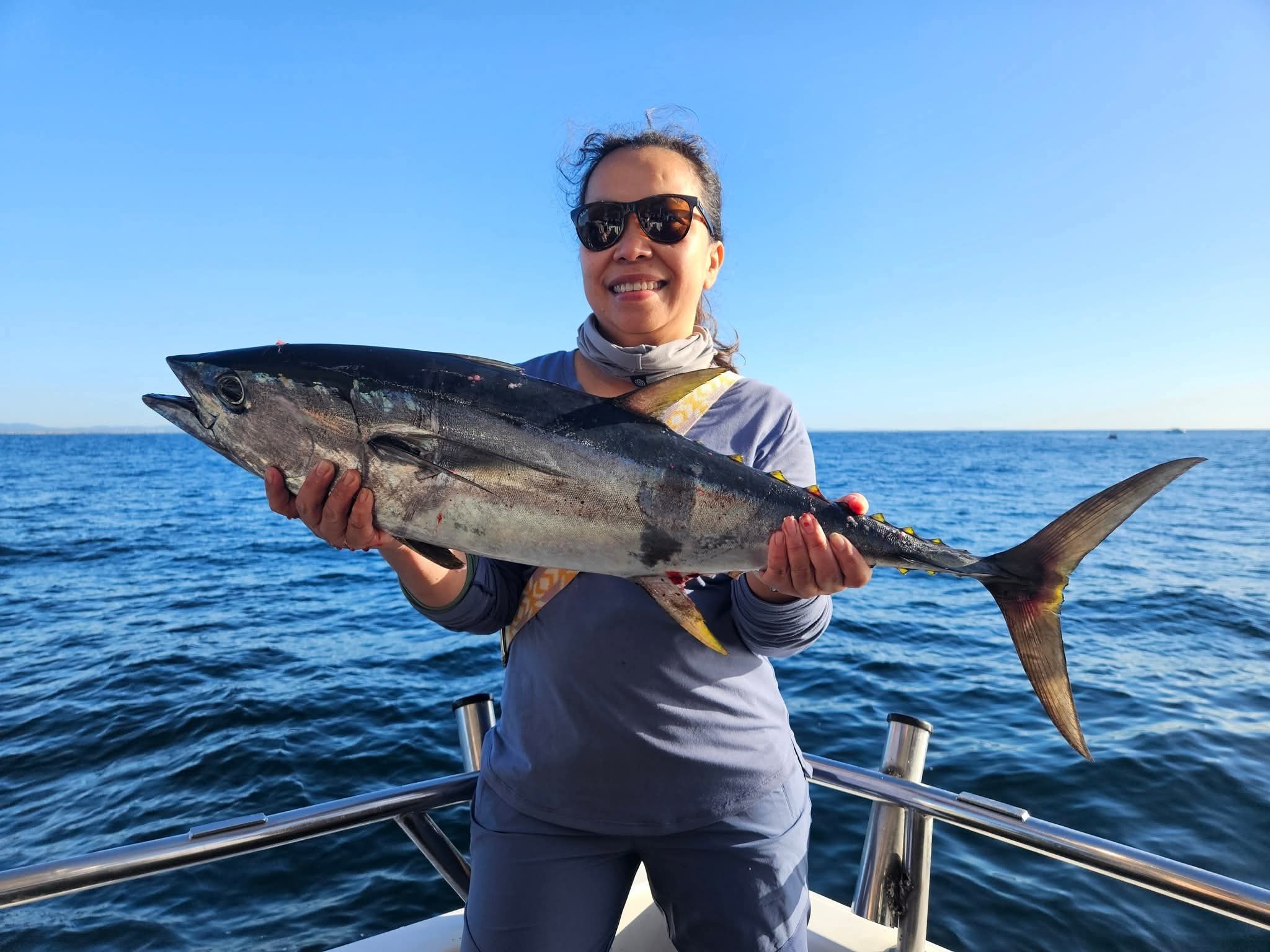
Tuna Fishing on the Gold Coast – Complete Guide to Targeting Tuna in South East Queensland 🎣
The Gold Coast is one of Australia’s premier destinations for offshore tuna fishing. With deep water close to shore, consistent bait activity and a wide range of pelagic species, anglers can enjoy year-round opportunities to target fast, hard-fighting tuna just an hour south of Brisbane.
Whether you’re chasing surface-feeding schools or targeting deeper water with bait and lures, tuna fishing on the Gold Coast offers thrilling action and outstanding table fish. In this guide, we’ll break down the main tuna species found locally, the most effective techniques, and proven tips to help you hook up more consistently.
Tuna Species Found Off the Gold Coast
Tuna are highly prized saltwater game fish known for their speed, endurance and brutal fighting power. Several species are commonly encountered offshore in South East Queensland, each with its own behaviour and preferred techniques.
Longtail Tuna
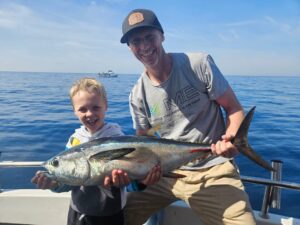 Longtail tuna are one of the most sought-after species on the Gold Coast. Often found feeding aggressively on the surface, longtails can grow large and are extremely powerful on light tackle. They are commonly spotted busting up baitfish near bait schools, reef edges and current lines.
Longtails respond well to casting metal slugs, stickbaits and live baits, particularly when approached quietly.
Yellowfin Tuna
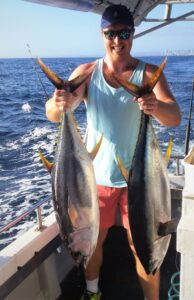
Yellowfin tuna are a true offshore prize. Larger fish are usually encountered wider offshore, often around temperature breaks, bait aggregations and current lines. Yellowfin are known for long, blistering runs and deep circling battles beneath the boat.
They are commonly caught trolling skirted lures, live baits such as slimy mackerel, or fishing in a burley trail.
Striped Tuna
Striped tuna (also known as skipjack) are abundant off the Gold Coast and provide fast-paced action. While smaller than yellowfin and longtail, they are aggressive feeders and excellent eating when bled and iced properly.
Striped tuna are often found in large surface schools and readily take trolled lures, chrome slices and bait.
Bonito
Bonito are closely related to tuna and are commonly encountered while trolling or casting into surface activity. While not everyone’s first choice for the table, they are an exceptional baitfish for targeting larger pelagics such as marlin, sharks and big tuna.
Mackerel Tuna
Mackerel tuna are fast, aggressive and commonly found feeding close to shore. They are often mixed in with bonito and striped tuna schools and readily take small metal lures, feathers and hard-bodied minnows.
Trolling for Tuna on the Gold Coast
Trolling is one of the most productive and reliable methods for catching tuna offshore.
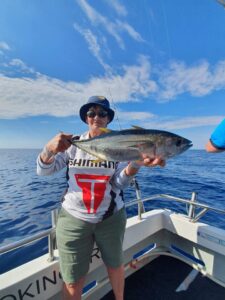 Effective trolling lures include:
-
Skirted trolling lures
-
Hard-bodied diving minnows (brands like Halco and Rapala)
-
Feather jigs
-
Chrome slices
-
Live or fresh dead baits
When trolling for tuna, set a spread of lures at staggered distances behind the boat to cover different water columns. A trolling speed of 5–8 knots is ideal for most tuna species.
Where to Troll
 While trolling, always keep an eye out for:
-
Current and tide lines
-
Reef edges and pressure points
-
Bait schools
-
Working birds and surface disturbances
If you locate tuna feeding on the surface, avoid driving straight through the school. This will often spook the fish and push them deeper. Instead, troll wide around the edges or approach quietly up-current.
In many cases, once a feeding school is located, shutting down the motor and drifting can be highly effective. This allows you to cast metal slugs, stickbaits, or lightly weighted baits directly into the action.
The Hook-Up and Fight
When a tuna strikes, there is no mistaking it. The hit is sudden and violent, and the reel will scream as line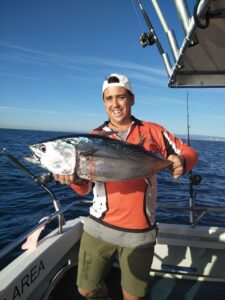 peels off at speed. Most tuna will hook themselves if the drag is correctly set.
Key fighting tips:
-
Always maintain constant pressure
-
If the line goes slack, wind quickly – the fish may be charging the boat
-
Expect long runs followed by deep dives
-
Be prepared for tight circles under the boat late in the fight
Tuna are relentless fighters and will test both angler and equipment. Clear communication and fast reactions are essential, especially when fish are circling near the keel or propellers.
Bait Fishing and Burleying for Tuna
Another deadly technique for tuna fishing on the Gold Coast is bait fishing using a burley trail. This method works exceptionally well when tuna are holding deeper or not actively feeding on the surface.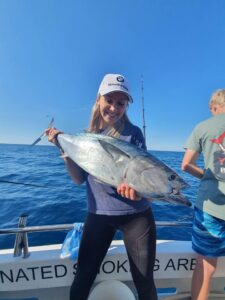
Burley can be created using:
-
A burley pot and masher
-
Cubed pilchards slowly fed over the side
Once the burley trail is established, set baits at varying depths within the slick.
Best Baits for Tuna
-
Live yellowtail scad
-
Live slimy mackerel
-
Lightly weighted pilchards
Live baits are generally the most effective. A 6/0 hook is ideal, with baits pinned either through the shoulder or nose. Balloons or floats can be used to keep baits away from the boat and higher in the water column when required.
Bycatch and Bonus Species
While targeting tuna offshore on the Gold Coast, it’s common to encounter other prized pelagic species,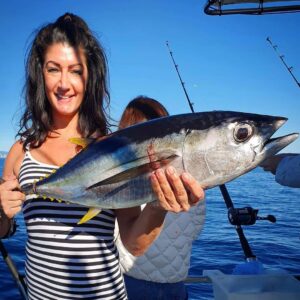 including:
This diversity makes tuna fishing one of the most exciting offshore pursuits in South East Queensland.
Gold Coast Tuna Fishing Charters
If you don’t have access to a boat or want to maximise your chances of success, a True Blue fishing charter is a great option. Experienced skippers understand seasonal movements, bait patterns and conditions, giving anglers the best opportunity to hook into fast and furious tuna action.
Final Thoughts
Tuna fishing on the Gold Coast offers adrenaline-filled action, incredible fights and some of the best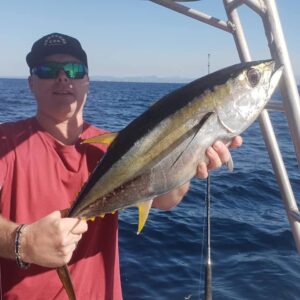 offshore fishing Queensland has to offer. With the right techniques, quality tackle and an understanding of tuna behaviour, anglers can enjoy consistent success targeting longtail tuna, yellowfin tuna, striped tuna, bonito and mackerel tuna throughout the year.
Whether trolling, casting into surface schools or fishing the burley trail, the Gold Coast is truly a world-class tuna fishery. 🐟🔥
Related Posts


Plan Your Next Charter
Chasing reef fish, game species, or a great day out on the water? Our crew is ready when you are.