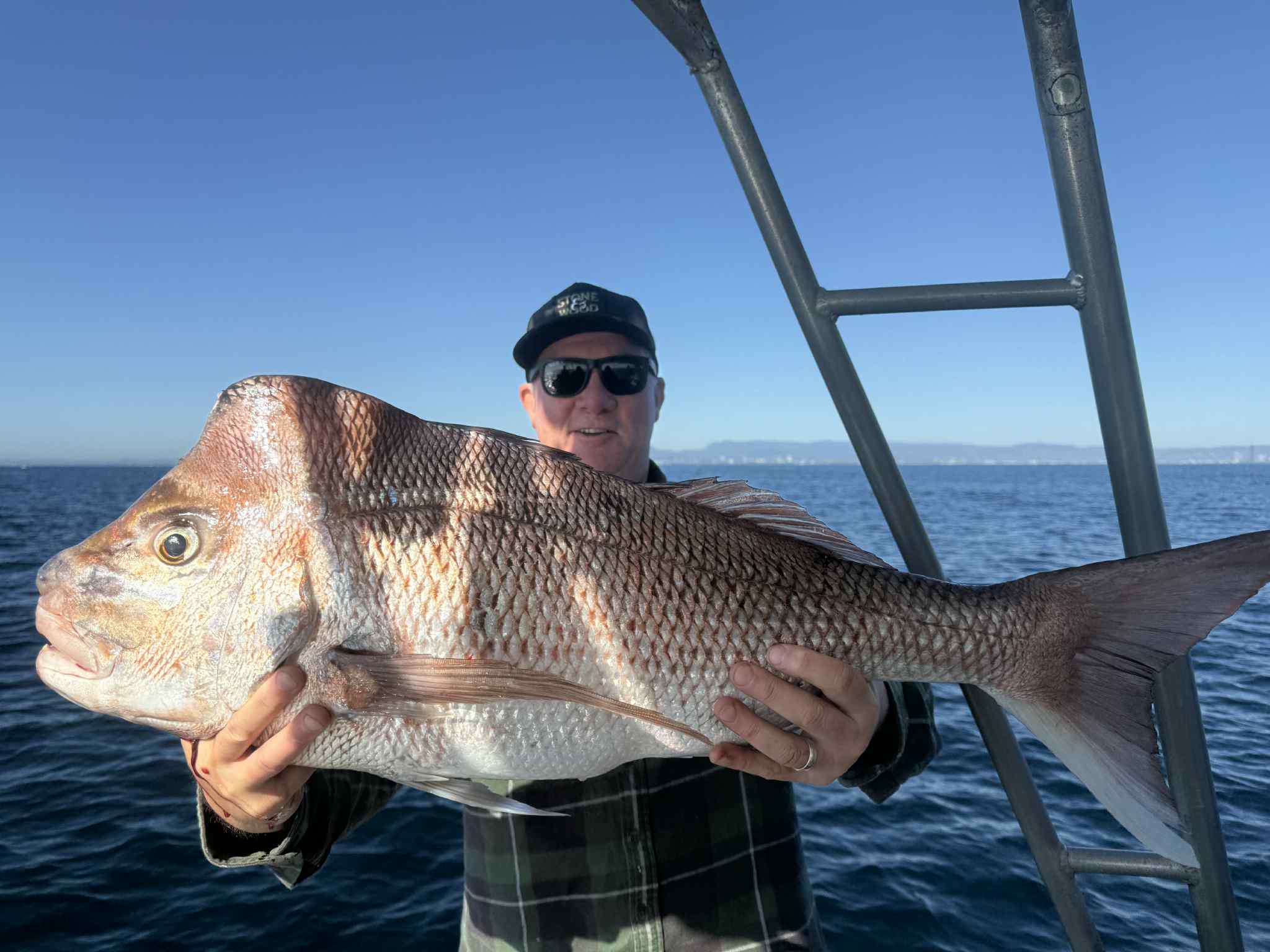
Deep Sea Fishing Techniques and Rigs Used Off the Gold Coast
The Gold Coast is one of Australia’s premier deep sea fishing destinations, offering access to productive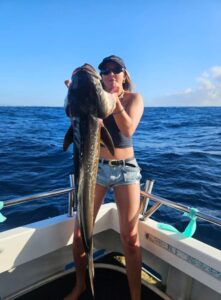 offshore reefs, drop-offs, and pelagic highways just kilometres from shore. Success offshore isn’t just about good weather and luck — it comes down to using the right fishing techniques and rigs for the conditions on the day.
At True Blue Fishing Charters, we use a range of proven deep sea fishing methods to target reef and pelagic species throughout the year. Understanding how and when these techniques are used gives anglers a better appreciation of offshore fishing and what makes the Gold Coast such a productive fishery.
Anchoring for Reef Fishing
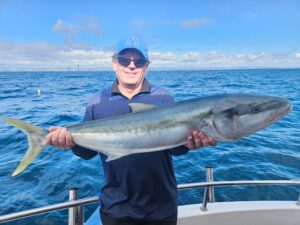 Anchoring is one of the most common deep sea fishing techniques used on the Gold Coast, particularly when targeting reef species such as snapper, cobia, teraglin, and kingfish. By anchoring precisely up-current of the reef, baits can be presented naturally back into the strike zone.
Successful anchoring requires accurate positioning, good boat handling, and reliable anchoring equipment. Once anchored, anglers can focus on fishing the structure below with minimal drift, allowing baits to stay in the target area longer.
Drifting Offshore Grounds
Drifting is another highly effective technique used during deep sea fishing charters. When fish are spread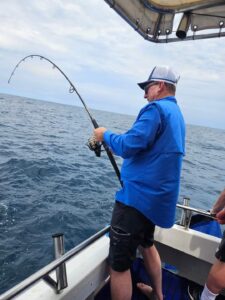 over a wider area or when current makes anchoring difficult, drifting allows anglers to cover more ground.
During a drift, baits or lures are worked naturally along the seabed or through the water column. Drift fishing is especially productive for snapper, amberjack, and mixed reef species, and it allows skippers to adjust speed and direction to suit conditions.
Bottom Fishing with Paternoster Rigs
Paternoster rigs are a staple of Gold Coast deep sea fishing. These rigs are ideal for fishing baits directly on or just above the bottom, making them perfect for reef species that hold close to structure.
A typical paternoster rig uses two dropper loops with sinkers at the bottom, keeping baits separated and reducing tangles. This setup is reliable, easy to use, and highly effective in deeper water where current can be strong.
Float Lining for Wary Fish
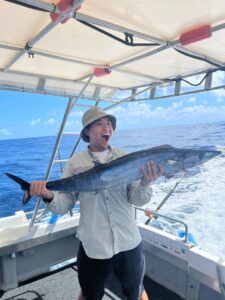 Float lining is a refined deep sea fishing technique used when fish are cautious or heavily pressured. By using minimal weight, baits sink slowly and naturally through the water column, mimicking free-falling prey.
This technique is especially effective for snapper and kingfish in clearer water. Float lining requires patience and a good understanding of current and bait presentation, but when done correctly, it can produce exceptional results.
Jigging for Aggressive Species
Jigging is a high-energy deep sea fishing method that targets aggressive pelagic and reef species such as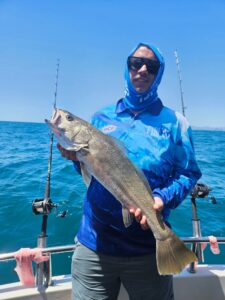 kingfish, amberjack, and samson fish. Metal jigs are worked vertically through the water column with sharp lifts and drops, triggering reaction strikes.
Jigging is often used when fish are holding mid-water or when sonar shows active schools below the boat. It’s physically demanding but extremely rewarding, offering some of the hardest-fighting fish available offshore.
Trolling for Pelagic Fish
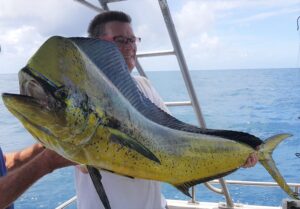
Trolling is commonly used when travelling between fishing locations or when targeting fast-moving pelagic species such as mackerel, tuna, wahoo, and mahi-mahi. Lures or rigged baits are towed behind the boat at varying speeds to cover large areas of water.
This technique is ideal for locating fish and capitalising on surface activity, bait schools, or temperature breaks offshore.
Live Baiting for Trophy Fish
 Live baiting is one of the most effective deep sea fishing techniques available. By using live bait such as slimy mackerel or yellowtail, anglers present the most natural offering possible.
Live baits are commonly used on reefs or near bait schools to target larger predators including kingfish, cobia, and snapper. Proper bait handling and rigging are key to keeping live bait active and appealing.
Deep Sea Fishing with True Blue Fishing Charters
At True Blue Fishing Charters, we use a combination of these proven techniques depending on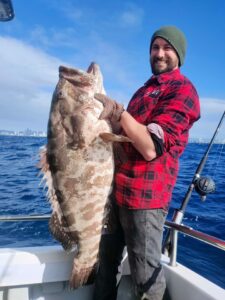 conditions, target species, and the experience level of our guests. Our local knowledge of Gold Coast offshore grounds allows us to adapt our approach to maximise fishing opportunities on every trip.
Whether you’re new to offshore fishing or an experienced angler, understanding these deep sea fishing techniques adds to the experience and highlights why the Gold Coast is such an outstanding fishing destination.
Related Posts

Plan Your Next Charter
Chasing reef fish, game species, or a great day out on the water? Our crew is ready when you are.